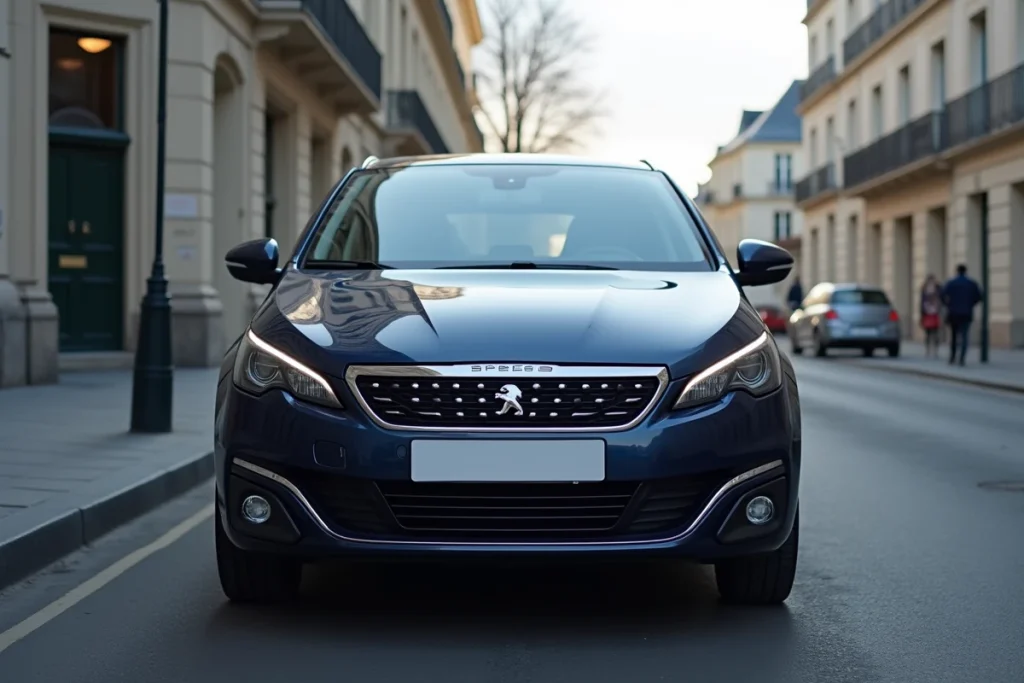
Parking a Peugeot 308 in a Parisian underground parking lot or loading a stroller trunk before a vacation departure is not the same problem. The dimensions of the Peugeot compact remain stable from one engine to another, but the differences between sedan and SW estate, or between thermal and electric versions, change the game on a daily basis. Let’s take a look at the measurements that really matter when choosing the right model.
Width excluding mirrors and city maneuvers: the forgotten measurement
When discussing dimensions, length monopolizes attention. In practice, it’s the width that poses the most difficulties. The 308 has a width excluding mirrors that clearly exceeds two meters, a common size in the compact segment but which complicates parking in older lots with narrow spaces.
The electrically folding mirrors, available from the Allure trim, then become an almost indispensable feature. Without them, you lose several precious centimeters on each side. For those living in the city center and parking in structures, checking the width with mirrors folded before purchase can prevent many scratches.
The height, on the other hand, does not vary according to the chosen engine. It remains under one meter fifty, which fits in almost all underground parking lots, including those with height restrictions limited to one meter eighty.
You can also find out everything about the dimensions of the 308 by consulting the detailed technical sheets that outline each measurement according to the version.
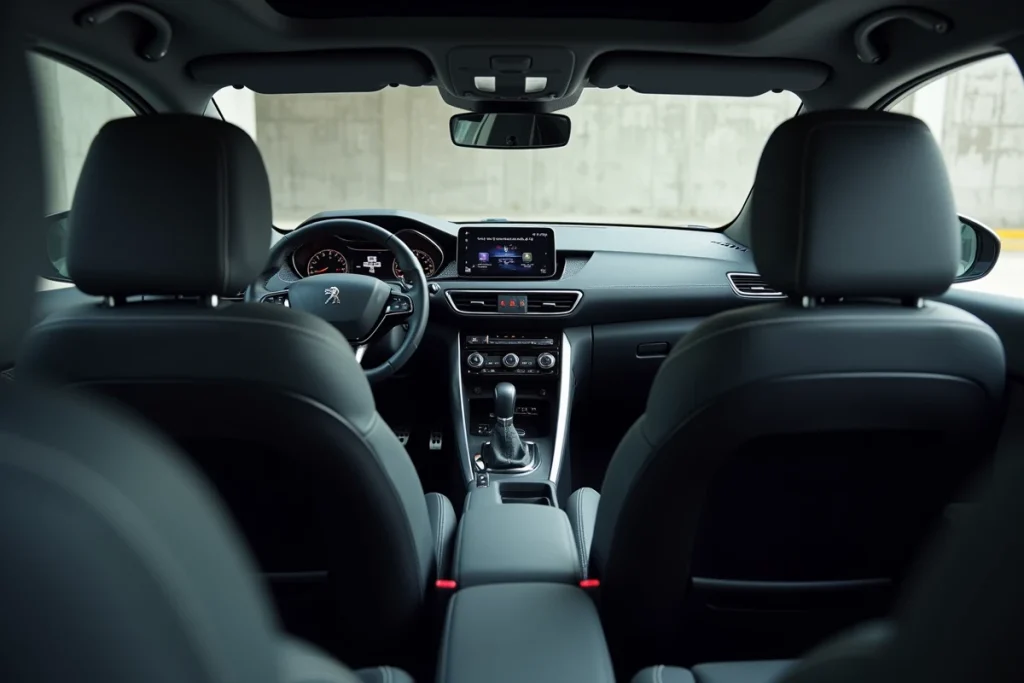
Trunk of the 308 sedan versus the SW estate: useful volume according to use
The five-door sedan version offers a decent trunk volume for the segment, sufficient for two cabin suitcases and a soft bag. The SW estate, on the other hand, adds a notable volume gain that changes the daily carrying capacity.
The SW transforms the 308 into a true family car without excessively lengthening its dimensions. The length difference between sedan and estate remains contained, but the loading volume significantly increases thanks to an extended roofline and a better-designed loading threshold.
When trunk choice depends on the engine
The plug-in hybrid versions and the e-308 electric house their battery under the floor, which slightly reduces the trunk volume compared to the petrol or diesel versions. You lose a few dozen liters, not enough to give up the PHEV if you need electric range, but it’s a consideration to be aware of before signing.
- Petrol or diesel version (PureTech, BlueHDi): maximum trunk volume, flat floor
- Plug-in hybrid version: slightly reduced trunk, battery under the floor
- e-308 electric version: volume comparable to the PHEV, but no bulky central tunnel
For a family with two young children, the thermal SW remains the most rational choice in terms of volume. Opinions vary on this point for electrified versions, with some owners finding the loss of volume negligible on a daily basis.
Weight and mass penalty: the hidden dimension of model choice
Since the 2025 weight penalty scale in France, the curb weight of the 308 has become a direct financial criterion. The electric and plug-in hybrid versions carry batteries that add several hundred kilos to the vehicle compared to a PureTech petrol version.
The new scale now penalizes the majority of Peugeot models, including the 308, due to the CO2 and weight tandem. You find yourself in a situation where the external dimensions remain identical, but the registration cost varies significantly depending on the chosen engine.
Compare total cost, not just the technical sheet
Two 308s of the same length and width can show a significant acquisition cost difference due to the mass penalty alone. Before choosing between a Hybrid 145 and an e-308, it is recommended to calculate the fiscal overcost related to weight, then relate it to the expected fuel savings.
- Check the exact curb weight on the certificate of conformity, not on the commercial brochure
- Include the mass penalty in the total budget (catalog price + CO2 penalty + weight penalty)
- Compare with the cost of use over three years (fuel or electricity, maintenance, insurance)
The external dimensions do not change, but the weight alters the financial equation.
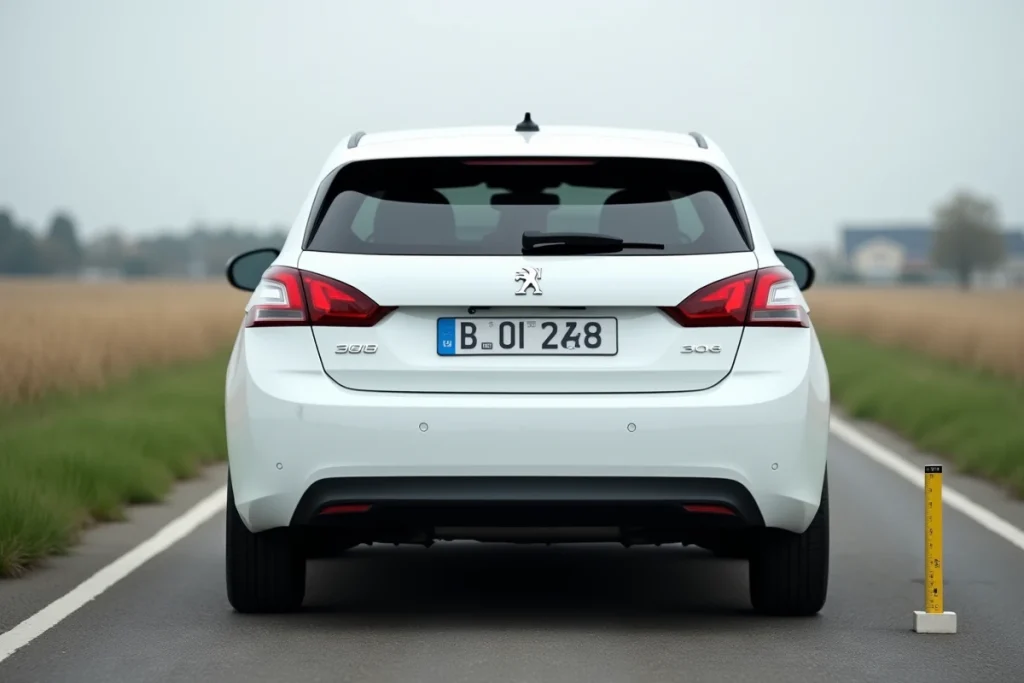
Driving aids and dimensions: what changes in 2026
European regulations require, starting July 7, 2026, a set of mandatory driving aids on all new registered cars. Intelligent speed assistance, lane keeping, driver attention monitoring: these systems will be added to the 308’s equipment without altering its external dimensions or structure.
This point deserves attention for those hesitating between a new model and a recent used one. A 308 registered before July 2026 does not necessarily come with all these devices as standard. The GT trim already integrates them largely, but the Style or Allure versions from before the facelift may lack them.
The dimensions remain the same, the sensors and cameras fit into the existing bumpers and windshield. No body modifications are necessary, confirming that the dimensions of the 308 are now decoupled from technological and regulatory developments.
Sedan or SW, thermal or electric: summary table to decide
| Criterion | 308 thermal sedan | 308 thermal SW | 308 PHEV / e-308 |
|---|---|---|---|
| Length | Compact, easy to park | Slightly longer | Identical to the sedan |
| Trunk | Decent for the segment | Family volume | Reduced by the battery |
| Weight | Lightest | Intermediate | Heaviest (potential penalty) |
| 2025 mass penalty | Low or none | Low | Possible fiscal overcost |
| Driving aids 2026 | Depending on trim and date | Depending on trim and date | Integrated on recent models |
The choice boils down to three concrete questions: what trunk volume do we really need, what fiscal overcost are we willing to accept to drive electrified, and do we regularly park in constrained spaces. The external dimensions of the 308 remain almost identical from one version to another, so it’s the weight and daily use that make the difference, not the length on the technical sheet.