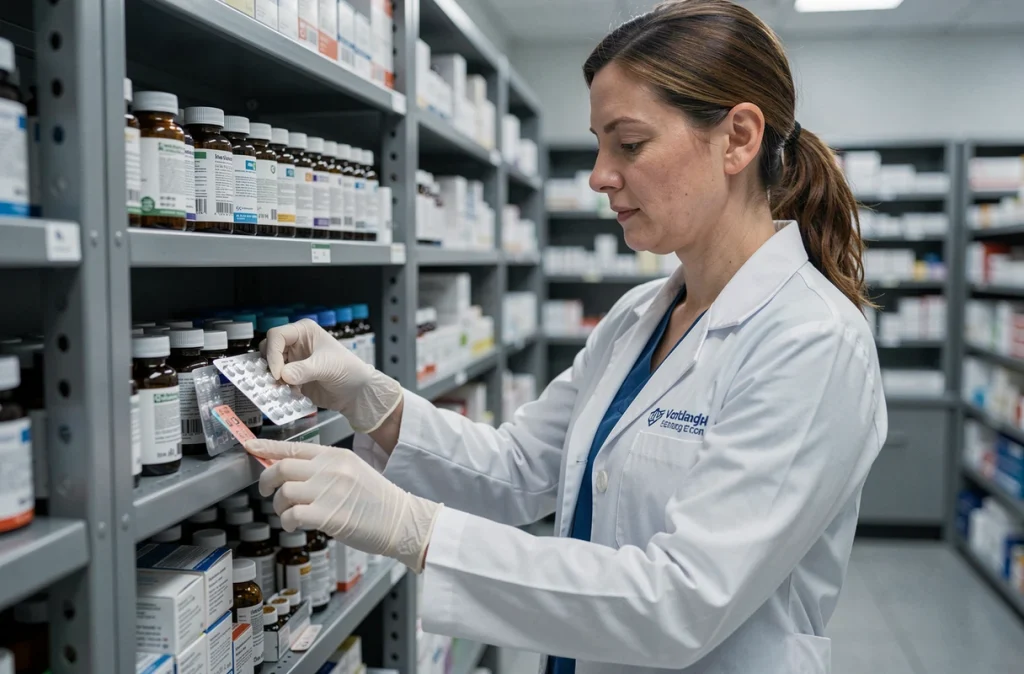
Pharmaceutical logistics is often measured by its ability to maintain the integrity of a product between two fixed points, such as a warehouse and a pharmacy. However, the most costly performance gaps are no longer found in these traditional segments. They appear in the last mile, where transport conditions fall outside standardized controls, and in the reporting of traceability events, where a batch becomes invisible for a few hours.
This article compares the documented breaking points in the pharmaceutical supply chain and the technical responses that are emerging to bridge them.
Pharmaceutical Last Mile: Where Compliance Losses Are Concentrated
Good Distribution Practices (GDP) have long governed inter-site transport. The novelty lies in the tightening of requirements regarding the final delivery to the patient or point of dispensing. In Germany, the Bundesministerium für Gesundheit worked in 2026 on regulations requiring logistics operators to document and demonstrate strict compliance with temperature conditions during direct delivery.
This regulatory shift changes the game. A carrier that previously adhered to the cold chain between wholesaler and pharmacy could until now be satisfied with occasional readings on the last segment. Proof of temperature maintenance must now cover every step up to the recipient, including home deliveries of temperature-sensitive biomedicines.
Healthcare professionals managing pharmaceutical product flows through specialized platforms like pharmalog.fr have tracking tools suited to this constraint, providing visibility on end-to-end transport.
Event Traceability and Serialization: Comparative Table of Requirements
Pharmaceutical traceability is no longer limited to verifying the authenticity of a batch. Several markets now require event-based reporting of every movement of the medication. The Tatmeen system in the United Arab Emirates illustrates this shift: every physical transfer of the product must be declared as a traceable event on a national platform.
| Criterion | Classic Traceability (EU Serialization) | Event Traceability (Tatmeen Model) |
|---|---|---|
| Scope | Verification at dispensing | Every physical movement of the batch |
| Data Reported | Unique product identifier | Timestamped event with location |
| Reporting Frequency | At entry and exit points | At each transfer between operators |
| Logistical Impact | Scan in warehouse and pharmacy | Continuous integration throughout the chain |
| Level of Visibility | Partial (fixed points) | Continuous (full flow) |
The gap between these two models has direct consequences on logistics information systems. A provider operating solely under the European serialization regime is not equipped to meet the requirements of an event-based market without overhauling its data reporting processes.
Consequences for Exporting Healthcare Professionals
Establishments or laboratories distributing to non-EU markets must anticipate this divergence. A flow management system designed for European serialization does not cover event-based traceability. Compliance requires the integration of sensors and platforms capable of generating an event at each load break.
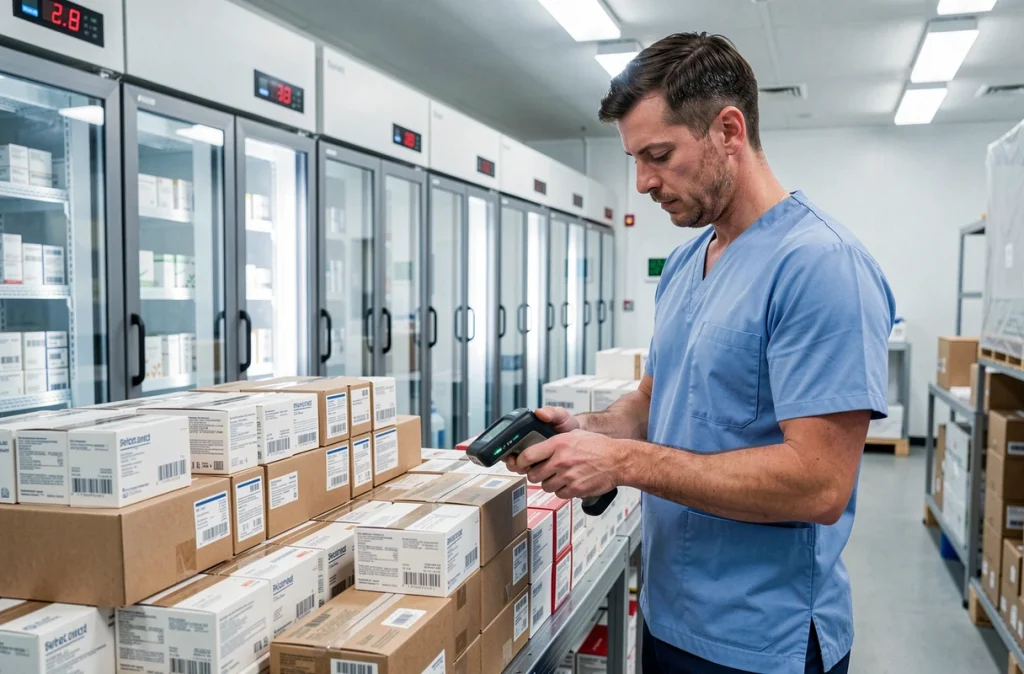
Continuous Monitoring of the Cold Chain: Instrumented Sensors vs. Spot Readings
The cold chain remains the major operational challenge of pharmaceutical transport, particularly for biomedicines that require very low temperatures. Approaches vary depending on the level of control sought.
- Spot readings (passive recorders checked upon arrival) detect temperature excursions after the fact, with no possibility of intervention during transport.
- Real-time connected sensors continuously transmit temperature data, allowing for immediate alerts if a threshold is crossed.
- Instrumented systems coupled with artificial intelligence analyze temperature trends and trigger predictive corrective actions before an excursion occurs.
The shift from spot readings to continuous monitoring significantly reduces losses of temperature-sensitive products. This transition represents an investment in infrastructure (sensors, connectivity, data platform), but the losses avoided and enhanced compliance justify the trade-off for high-value flows.

Temperature Management at Extreme Ranges
Some biological products require maintenance at temperatures as low as -196 °C. At this level, even the slightest interruption of the cold chain compromises treatment effectiveness. Suitable logistical solutions combine qualified insulated packaging, active containers, and instrumented end-to-end supervision.
Sustainability and Pharmaceutical Logistics: What the PAS 2080 Standard Changes
Environmental pressure on pharmaceutical supply chains takes a concrete form with frameworks like PAS 2080, which targets the reduction of carbon emissions across the entire life cycle of the logistical infrastructure. For the pharmaceutical sector, this means that the carbon footprint of insulated packaging and refrigerated transport falls within the scope of assessment.
Healthcare professionals managing logistics services must integrate this dimension into their calls for tenders. A logistics provider capable of documenting the environmental impact of its temperature-controlled transport solutions has a measurable advantage, beyond mere CSR display.
The convergence of GDP compliance, event traceability, and environmental requirements reshapes the criteria for selecting a pharmaceutical logistics partner. The distinguishing factor is no longer the ability to transport a refrigerated package, but the ability to prove, data point by data point, that each step of the flow simultaneously meets the constraints of temperature, traceability, and carbon footprint.