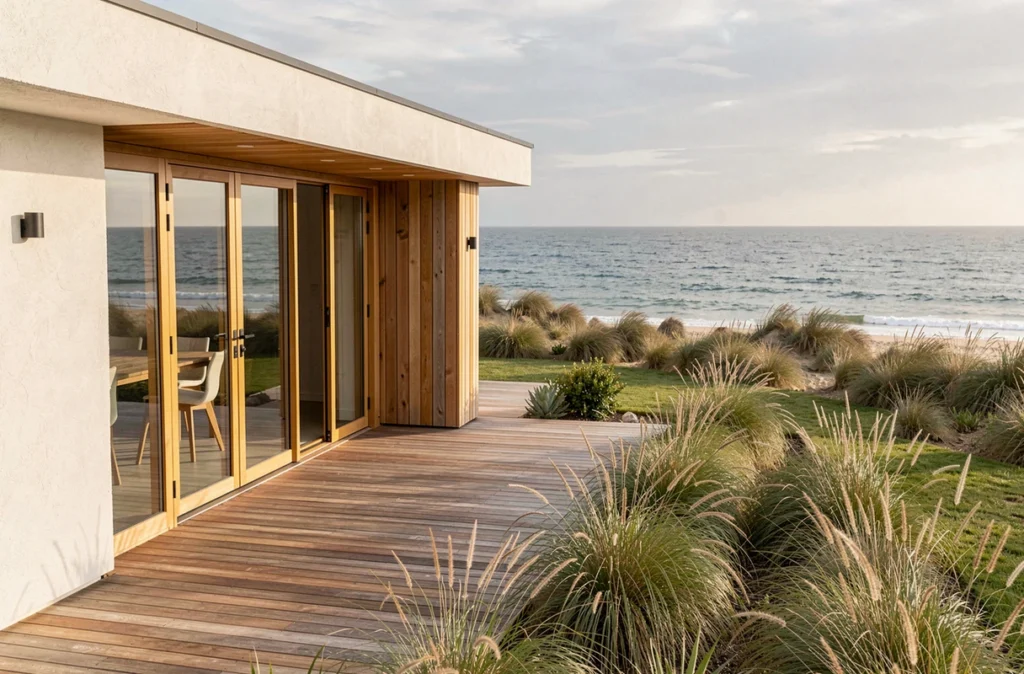
The Vendée coastline accounts for a significant share of property searches in the Pays de la Loire region, driven by towns such as Les Sables-d’Olonne, Saint-Gilles-Croix-de-Vie and Noirmoutier-en-l’Île. The market for oceanfront homes in Vendée is about more than a catalogue of properties with terraces and unobstructed views. Beyond the appeal of the setting, several regulatory, tax and environmental factors determine whether buying on this stretch of the Atlantic coast is the right choice.
Coastal risk prevention plans: how the plot affects your plans
Buying a seaside home in Vendée means checking the plot’s regulatory zoning before even considering the number of rooms or the size of the land. Coastal risk prevention plans (PPRL) divide each municipality into distinct zones. Some prohibit all construction or extensions, while others allow them subject to strict conditions.
Being close to the beach says nothing about how a plot is classified. Two homes on the same street, just a few dozen metres apart, may fall into different zones. One may allow an additional storey or an extension, while the other may not. If you are planning renovations after buying, the PPRL determines the property’s actual scope for development.
You can check this information at the town hall or through the municipality’s online planning documents. Estate agents do not always mention it proactively, and it is not consistently included in listings. Anyone searching for a seaside home for sale in Vendée should factor this in from the initial shortlist stage.
Coastal erosion in Vendée: a separate issue from the risk of flooding
The risk of marine flooding (temporary inundation during storms) is often the first issue raised in property assessments. Coastal erosion is a different phenomenon: the gradual wearing away of the shoreline, which reduces the strip of land between the ocean and homes over the long term.
The 2021 Climate and Resilience Act introduced specific tools for municipalities exposed to coastal erosion. These include local maps projecting the shoreline at different points in the future. The maps help assess whether a property that is currently a reasonable distance from the water will remain so in the decades ahead.
The future of an area also depends on local decisions about development and coastal protection. Some municipalities invest in defensive structures, while others opt for strategic retreat. In Saint-Gilles-Croix-de-Vie, coastal erosion is the subject of debate among residents and elected officials, with no firm consensus yet on the strategy to adopt.
For buyers, the relevant information is not just the property’s current distance from the ocean, but the projected changes to the coastline over the period they expect to own it. This matters even more when buying a villa with land, as its value is directly linked to the usable area.
Taxation of second homes on the Vendée coast
A significant proportion of homes sold by the ocean in Vendée are bought as second homes. The local taxes that apply warrant particular attention, because the rates of increase in second-home tax vary from one municipality to another.
Since 2023, municipalities in high-demand areas have been able to vote to increase the second-home tax. The rate is set by each municipal council. As a result, two neighbouring towns on the Vendée coast may apply very different increases, significantly affecting the annual cost of ownership.
- The applicable increase can be checked in the open data published by the Directorate General of Public Finances, municipality by municipality.
- The actual amount depends on the property’s cadastral rental value, which varies according to its size, location and features.
- For a prestigious property with sea views, a swimming pool and a large plot, the difference between two municipalities can amount to several hundred euros a year.
Estimating the amount due using a general rate would be a mistake. Each municipality sets its own rate of increase, and the only way to find out the actual cost is to check the specific tax situation in the municipality you are considering.
How to choose an oceanfront home in Vendée: look beyond the view
Listings highlight sea views, terraces, the number of bedrooms and proximity to the beach. These features matter, but they are not enough to distinguish a sound purchase from a risky one on the Vendée coast.
- The property’s orientation in relation to prevailing winds (west, north-west) affects everyday comfort and the upkeep of windows, doors and façades exposed to sea spray.
- The soil type and wastewater system (mains or individual) affect maintenance costs, especially on plots close to the shore.
- Access outside the summer season determines whether a property is viable as a main residence: some seaside neighbourhoods lose their shops and services between October and April.
- Digital connectivity (fibre broadband and mobile coverage) still varies from one area to another, even in well-known tourist towns.
The market is not uniform along the Vendée coast. Les Sables-d’Olonne, La Tranche-sur-Mer, Jard-sur-Mer, Noirmoutier Island and Île d’Yeu attract different types of buyers and cater to different budgets. A villa with a swimming pool in Les Sables-d’Olonne and a character home on Île d’Yeu offer different lifestyles, access requirements and resale prospects.
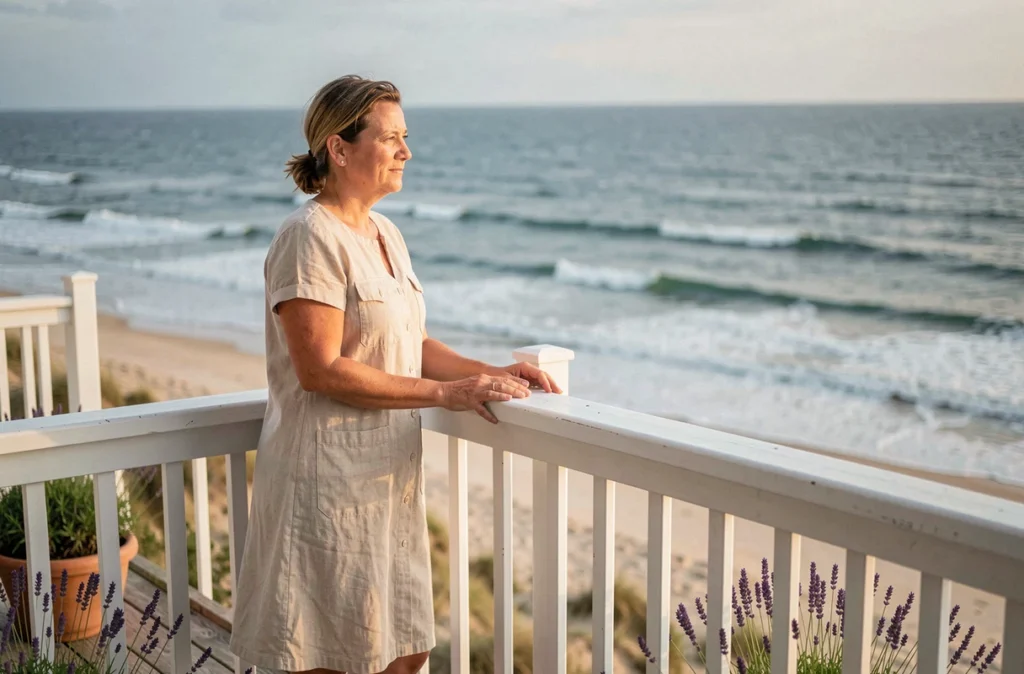
Buying an oceanfront home in Vendée is a commitment that can last for decades. Coastal risks, planning regulations and local taxes are practical factors that matter just as much as falling in love with a terrace overlooking the Atlantic. Checking the PPRL, coastal erosion projections and the municipality’s tax increase rate before signing is one of the most useful steps you can take to safeguard a purchase on this coast.