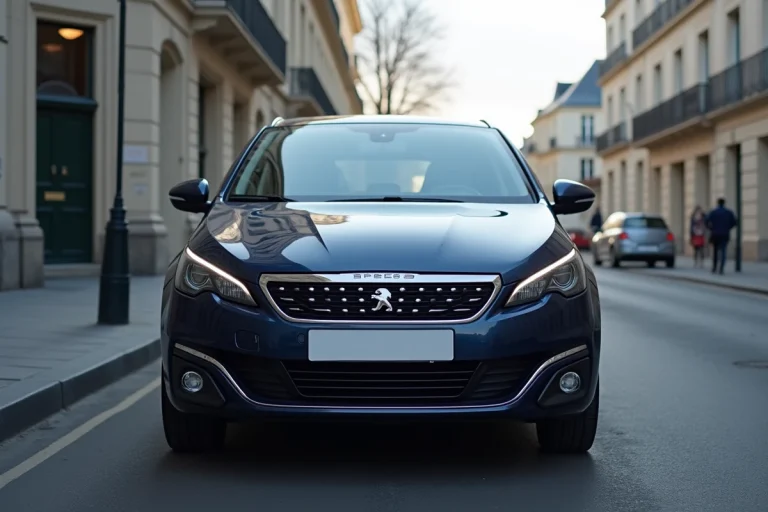
Choosing a car for an enthusiast today means looking well beyond the spec sheet. Local driving restrictions, accelerated depreciation on certain electric models, and connected services with an uncertain lifespan all weigh as heavily in the buying decision as engine torque or chassis dynamics. Understanding each of these factors can help you avoid an unpleasant surprise when it comes time to sell or pass the roadworthiness test.
Low-emission zones and Crit’Air stickers: rules still apply despite the confusion
Low-emission zones (LEZs) restrict some vehicles’ access to city centres. In May 2026, a legislative provision aimed at abolishing them was struck down by the Constitutional Council on procedural grounds. LEZs therefore remain in force, and rules vary from one urban area to another, with further changes planned in several cities in 2027.
For fans of older combustion-engine cars or naturally aspirated sports cars, this means checking the details carefully before buying. A Crit’Air 3 coupé may be allowed to drive freely in one city but banned in another. Cross-checking the vehicle’s classification against the LEZ schedule for the area where you usually drive is not a mere administrative detail—it is essential to being able to enjoy the car.
Car enthusiasts following the latest news in Breizheo’s car section can regularly find updates on these regulatory changes, which are useful to check before any transaction.
Car depreciation and software obsolescence: two related pitfalls
Depreciation on a new vehicle is a familiar phenomenon. In the used electric-car market, it takes on an added dimension linked to the battery and onboard software.

Battery health: mandatory disclosure coming soon
The government has announced a plan to introduce, from spring 2027, mandatory disclosure of battery health when a vehicle is resold. This measure should reassure used-car buyers and reduce the mistrust currently holding back this segment of the market.
Until then, a savvy buyer can request a remaining-capacity assessment from an approved centre. The key figure is the percentage of capacity remaining compared with when the battery was new: below a certain threshold, replacement costs can turn an apparent bargain into a financial black hole.
Connected services: check how long support will last
Reports published in 2026 describe connected features becoming unusable after a mobile network is shut down or a manufacturer ends software support. Frozen onboard navigation, a disabled remote-control app, discontinued OTA updates: software obsolescence undermines a vehicle’s usefulness long before mechanical wear sets in.
Before signing, three checks are essential:
- The mobile network generation (3G, 4G, 5G) used by the vehicle and the expected shutdown date for that network in the country where it will be used.
- The manufacturer’s commitment to providing software updates, often set out in the connected-service terms and conditions.
- Whether the vehicle can operate normally (starting, charging, climate control) without an active connection, to ensure it remains usable even when offline.
Choose an electric car based on real-world use, not maximum range
The range listed on a spec sheet grabs attention, but it often leads buyers towards an oversized vehicle. An opinion published by Ademe in October 2026 recommends matching the vehicle to your usual journeys rather than aiming for the greatest possible range.
A larger battery means a higher purchase price, more weight (affecting handling and energy consumption), and greater resource use in manufacturing. For daily journeys of a few dozen kilometres and overnight home charging, a model with moderate range will more than meet your needs while limiting depreciation linked to the ageing of a large battery pack.

The same reasoning applies to hybrids. The market now offers several configurations (mild hybrid MHEV, full hybrid HEV, plug-in hybrid PHEV), each suited to a different type of driver. A PHEV only makes sense if the owner charges the battery regularly. Without regular charging, it uses more fuel than a full hybrid because of the extra weight of its battery.
Enthusiast cars and modern constraints: factors to weigh together
Modern constraints do not take away the pleasure of driving, but they do call for a more methodical balancing act. A successful purchase means weighing several factors that manufacturers’ spec sheets never bring together:
- Whether the vehicle’s Crit’Air classification is compatible with the LEZs in areas you visit, including occasional trips (holidays, car meets).
- Expected depreciation, taking battery health into account for an electric car or the energy-efficiency rating for a combustion-engine vehicle.
- The long-term availability of onboard digital features, distinguishing standalone equipment (parking sensors, adaptive cruise control) from services that depend on a subscription or network.
- The true cost of insurance and maintenance, which can vary considerably between a plug-in hybrid SUV and a combustion-engine coupé with similar power.
A vehicle that ticks every technical box but is barred from LEZs for six months of the year loses some of its appeal. Conversely, a well-rated Crit’Air combustion-engine model that is mechanically reliable and free of short-lived connected features retains its practical value over time.
The car market moves quickly, and the rules governing driving, resale and charging can change from one year to the next. Checking every factor at the time of purchase, rather than relying on information read a few months earlier, remains the most worthwhile precaution for an enthusiast.