Retired homeowners face a double constraint: a home that ages with them and fixed incomes that limit their investment capacity. In 2026, the landscape of renovation aid for seniors undergoes structural changes, with a refocusing of MaPrimeRénov’ and the stability of MaPrimeAdapt’. Understanding these developments allows for a balance between energy renovation and adapting housing for aging.
Single Window France Rénov’: what changes for retirees since August 2026
Since August 17, 2026, France Rénov’ has become the single entry point for all Anah aid requests. MaPrimeRénov’, MaPrimeAdapt’, Ma Prime Logement Décent: each file is created and managed exclusively through the portal france-renov.gouv.fr.
This centralization replaces the old platforms (Mon Projet Anah, separate interface MaPrimeAdapt’). For a retiree accustomed to a precise administrative process, the change is significant. Connection now goes through FranceConnect or FranceConnect+, which requires having up-to-date digital identifiers.
The shift to a single portal simplifies the readability of the systems, but it creates a barrier for those who are not comfortable with online procedures. The France Rénov’ advisory spaces in person remain accessible for human support. This option is worth exploring from the reflection phase, even before estimating the costs of the work. The complete overview of each energy renovation aid available in 2026 allows for better targeting of the system suited to one’s situation.
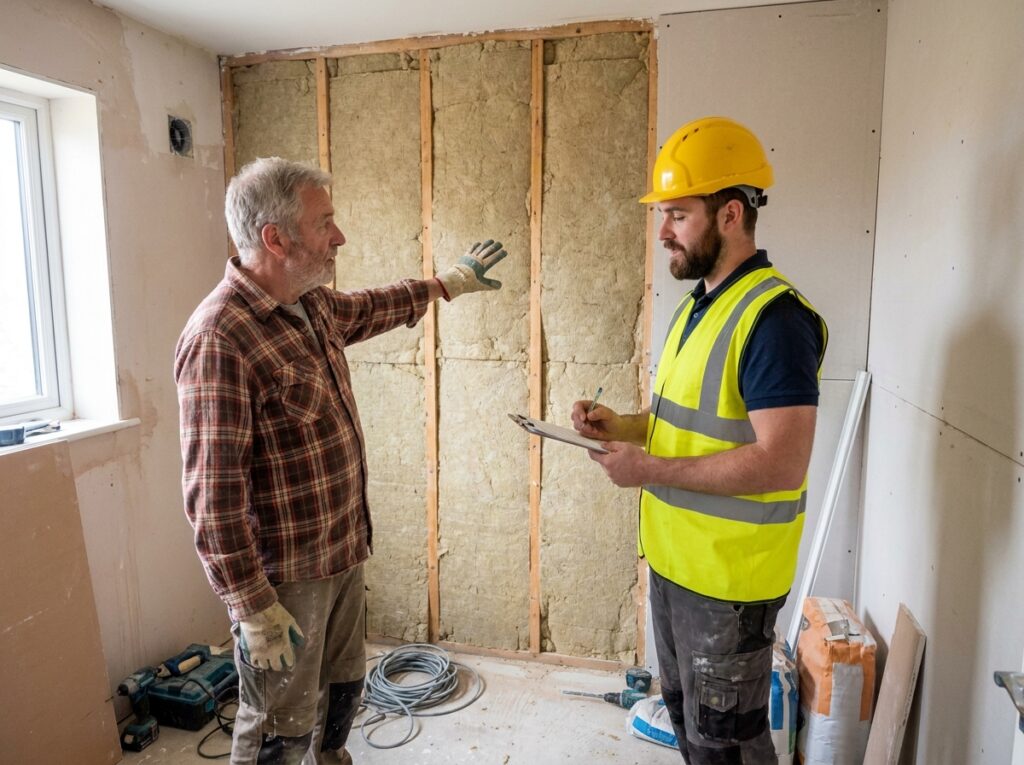
MaPrimeRénov’ by gesture in 2026: a refocusing that penalizes small works
The gesture-based path of MaPrimeRénov’, long favored by retirees for targeted interventions (replacement of a boiler, attic insulation), undergoes a significant tightening on September 1, 2026.
Works excluded since September 2026
Several categories of work are removed from the gesture-based system:
- Roof and attic insulation, which represented a significant portion of files from retired homeowners of single-family homes
- Joinery (windows, patio doors), often the first reflex to improve thermal comfort
- Some heating equipment: wood and pellet stoves, water heaters and solar heating, heat pumps dedicated to domestic hot water, several ventilation systems
For a retiree considering replacing a stove or insulating their attic with a modest budget, these works are no longer fundable by gesture. They remain eligible only within the framework of the accompanied path, which requires extensive renovation.
The accompanied path: more ambitious, more complex
The accompanied path aims for comprehensive renovations with significant energy gains. It remains accessible without income conditions but requires the intervention of a certified Rénov’ facilitator (called Mon Accompagnateur Rénov’). This professional conducts an audit, defines the work program, and monitors the construction site.
For a retiree, this path represents a heavier commitment: coordination of multiple trades, extended construction duration, cash advance before reimbursement. The amounts of aid are higher, but the entry ticket in administrative complexity is too.
MaPrimeAdapt’ in 2026: stable rates for aging adaptation
Unlike MaPrimeRénov’, MaPrimeAdapt’ retains its unchanged conditions and rates in 2026. This aid finances adaptation works for housing to loss of autonomy: walk-in showers, stairlifts, grab bars, widening doors, non-slip coverings.
Specific eligibility conditions for retirees
Access to MaPrimeAdapt’ depends on age and level of autonomy. Individuals aged 70 and over can access it directly, without justification of loss of autonomy. Between 60 and 69 years, a GIR classification (1 to 6) is required to prove a loss of autonomy.
The aid is reserved for households with modest and very modest incomes according to Anah’s rates. Coverage rates reach 50% or 70% of the cost of work, with a ceiling set at 22,000 euros excluding tax.
Mandatory support from a project management assistant
Every MaPrimeAdapt’ file includes the free intervention of a project management assistant (AMO). This professional assesses adaptation needs, establishes the specifications, and secures the administrative file. For a retiree, this support reduces the risk of error in assembling the file and choosing contractors.
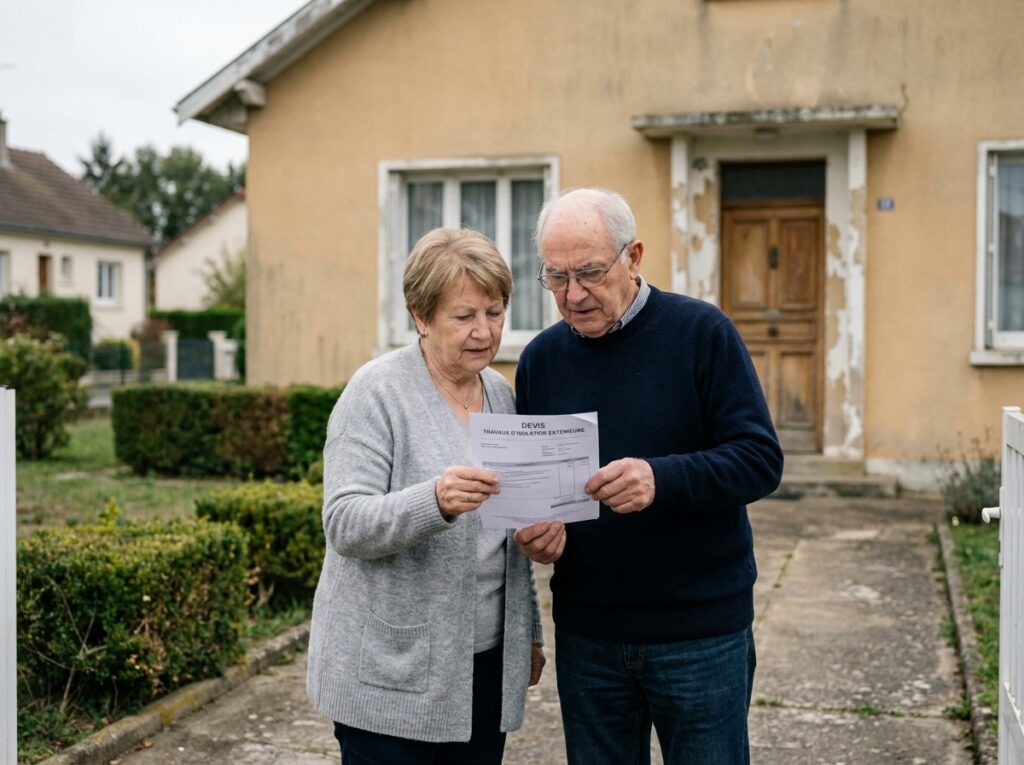
Balancing energy renovation and adaptation: two distinct logics
A retired homeowner may need to both better insulate their home and adapt it for reduced mobility. These two objectives fall under separate systems, with rules for accumulation regulated.
MaPrimeRénov’ and MaPrimeAdapt’ are cumulative on the same housing, provided that the works concerned are distinct. Installing a walk-in shower (MaPrimeAdapt’) and replacing a heating system (MaPrimeRénov’ accompanied path) can be done in two parallel files.
Other funding complements these aids. The zero-interest eco-loan remains accessible without income conditions to finance the remaining costs of energy works. The renovation advance loan (PAR+), repayable upon the sale of the property or inheritance, specifically targets elderly homeowners who do not wish to increase their monthly payments.
Energy savings certificates (CEE), provided by energy suppliers, remain available as a supplement. Some local authorities also offer property tax exemptions for renovated homes, a particularly relevant tax advantage for long-time retired homeowners.
The timing also matters in the balance. With the tightening of the gesture-based path since September 2026, a retiree who wanted to carry out simple insulation work should quickly turn to the accompanied path or prioritize housing adaptation via MaPrimeAdapt’, whose conditions remain more accessible. The stability of this system makes it, for those over 70, the most direct lever to improve their daily lives without committing to a comprehensive renovation project.