Fuveau is easily recognizable from afar thanks to its bell tower, perched on a hill between the Garlaban massif and the Sainte-Victoire mountain. This village in the Bouches-du-Rhône is one of the municipalities in the Aix region where the local fabric remains vibrant all year round, not just during the tourist season. Understanding Fuveau means grasping how a Provençal town combines medieval heritage, a rich associative life, and a daily connection to the Mediterranean nature.
Lignite and chapels: what the underground and stones tell about Fuveau
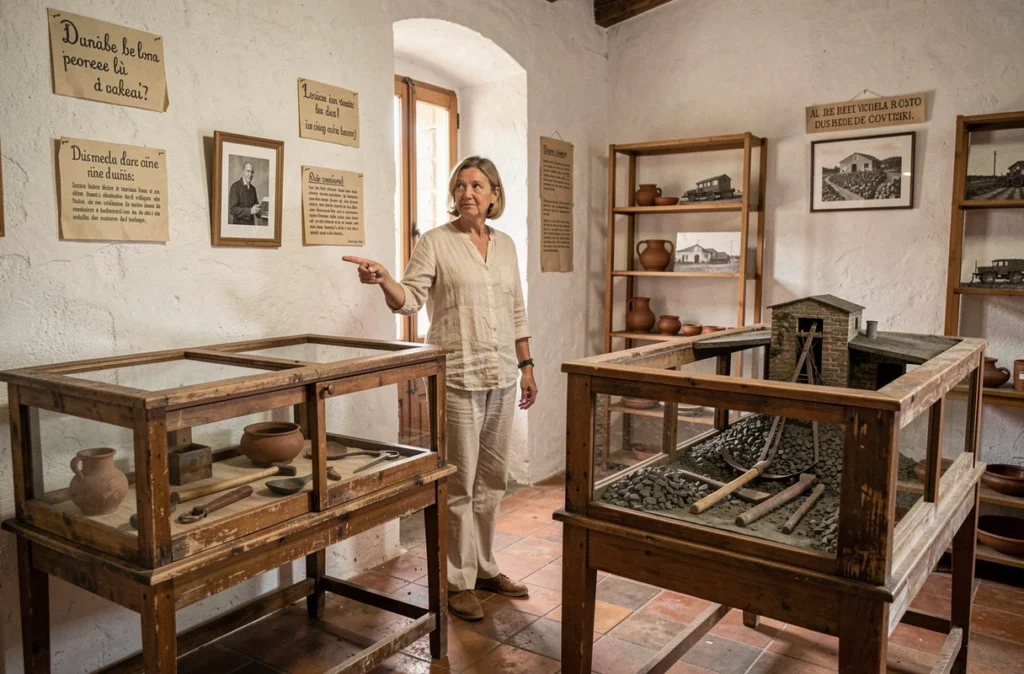
Before becoming a sought-after residential village, Fuveau thrived on lignite extraction for several centuries. This mining activity shaped the landscape, dug galleries beneath the hills, and attracted a working-class population that left its mark on the urban planning of the old center.
The narrow streets of the old village preserve much older traces. The Saint-Michel chapel, dated from the 11th century, is listed as a historical monument. It bears witness to an early religious settlement on this natural promontory.
Have you ever noticed that perched Provençal villages look similar from a distance but diverge as soon as you get into the details? In Fuveau, it’s the Bassac gate that makes the difference. It is the only remnant of the old ramparts. A dovecote, an old washhouse, and a windmill complete this route, each linked to a specific function of rural life in the past.
All practical information about the municipality, its services, and its news can be found on fuveau.fr, which simplifies the preparation for a visit or a move.
Panorama of Sainte-Victoire: why Fuveau’s viewpoint matters
The Sainte-Victoire mountain, made famous by Cézanne’s paintings, can be seen from many points in the Aix region. The panorama from Fuveau offers a lesser-known angle, oriented southeast, which allows for a different reading of the relief.
From the esplanade near the Saint-Michel church (19th century), the view also extends to Sainte-Baume, Olympus, and the Aurélien chain. This triple horizon is rare in the Bouches-du-Rhône. Few municipalities allow for such a wide embrace of massifs at a glance.
This geographical situation has a concrete downside: the proximity of forested massifs exposes Fuveau to fire risks. In August 2026, a fire broke out near the A52 in the municipality, mobilizing about 90 firefighters and aerial resources. The controlled episode reminded us that living close to the garrigue requires constant vigilance and temporary access restrictions to the hills during the summer period.
Association forum and tomato festival: the calendar that structures local life
The life of Fuveau is not limited to its built heritage. The village operates thanks to an associative network that animates daily life well beyond the summer months.
The Association Forum is held every year in the town hall courtyard, Boulevard Émile Loubet. In 2026, it is scheduled for Saturday, September 5, from 9 AM to 5:30 PM. It is the meeting point where Fuvelains (the official demonym) discover the sports, cultural, and solidarity activities offered in the municipality.
Another event that reflects the local character is the tomato festival, which combines cooking contests, walks, and workshops in the city center. This type of event, centered around a local product, illustrates a concrete attachment to Provençal culture, far from folkloric reconstructions.
- The Association Forum allows for direct registration with local clubs, from horseback riding to visual arts.
- Regular flea markets enliven the weekends and attract visitors from neighboring municipalities.
- Temporary exhibitions, such as the “Colors from Afar” exhibition, add an artistic dimension to the cultural calendar.
Fuveau in the Aix-Marseille metropolis: a village that is not isolated
Fuveau is part of the Aix-Marseille-Provence metropolis. This affiliation has direct consequences on daily life: public transport network, intermunicipal waste management, regulated urban planning policy.
Specifically, the municipality is located about twenty minutes from Aix-en-Provence by road. This proximity explains Fuveau’s residential appeal, attracting families seeking the tranquility of a village without giving up the services of a large urban area.
The EFJL equestrian center (Équitation Fuveau Jeunesse Loisir) exemplifies this dynamic: a leisure facility located in a rural setting but accessible to residents of the entire metropolis. This logic is also found in the outdoor activities offered around the Garlaban, ranging from hiking to botanical discovery.
Visiting Fuveau: where to start
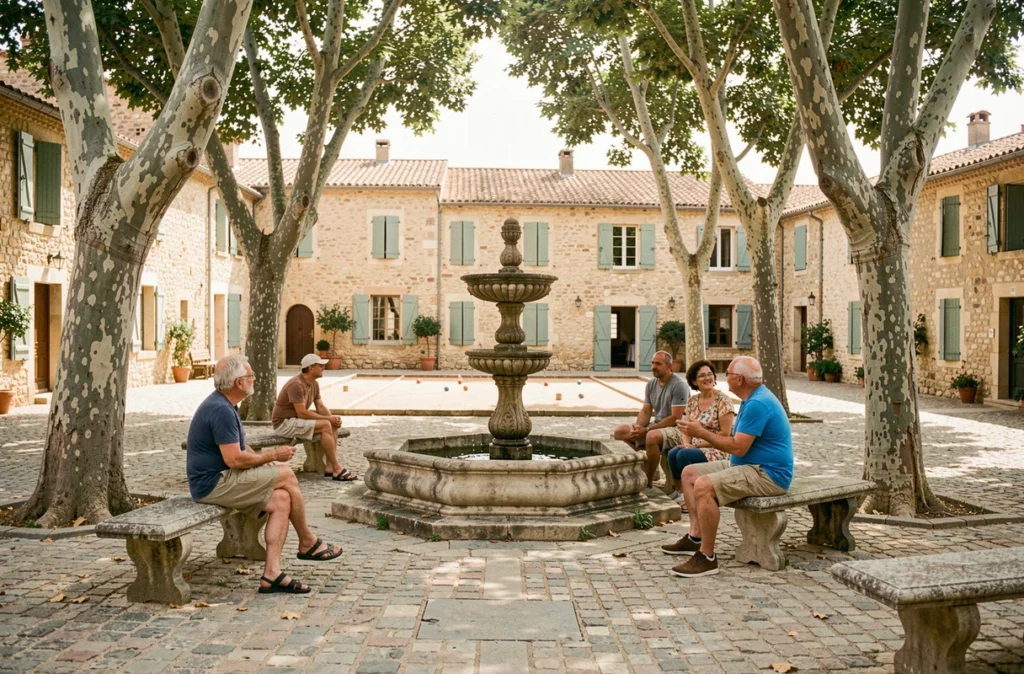
The most natural route starts from the central square, climbs towards the Saint-Michel chapel through medieval streets, passes by the Bassac gate, and leads to the panoramic viewpoint. Allow a good hour to absorb the architectural details without rushing.
Guided tours are available, such as those offered by Secrets d’ici, which emphasize local anecdotes and the links between Fuveau and cinema (the village has served as a natural backdrop several times). Old Fuveau can be explored on foot, with no particular difficulties.
Fuveau is not the most photographed or publicized Provençal village. This is precisely what preserves its rhythm. Between the mining memory embedded in the soil, the panoramas that Cézanne could have painted from its hills, and an associative fabric that does not depend on tourism to exist, the municipality maintains a coherence that many postcard villages have lost.