The low-residue diet imposed before a colonoscopy is based on a simple principle: to minimize fibers and undigested compounds in the small intestine so that the colon is perfectly visible during the examination. This dietary restriction, usually prescribed for one to three days, does not mean that one has to be hungry all the time. With the right choices of permitted foods, each meal can remain satisfying.
Permitted proteins and dairy: the anti-hunger allies of the low-residue diet
The feeling of hunger during preparation for the colonoscopy rarely comes from a lack of calories. It mainly arises from plates that are too low in protein and fat, the two nutrients that slow gastric emptying and prolong satiety.
Lean proteins form the basis of each meal: chicken, turkey, white fish, hard-boiled eggs or omelets. Their slow digestion maintains a stable energy level for several hours.
Several recent protocols also allow certain dairy products during the low-fiber phase. Plain yogurt, fresh cheese like cottage cheese, and sometimes skim milk remain compatible with the expanded low-residue diet. These foods provide calcium, additional protein, and especially a creamy texture that breaks the monotony of meals. In addition to these basics, Pharmidea’s dietary advice details concrete combinations for each time of day.
A useful note: always check with your doctor if your protocol corresponds to a strict or expanded low-residue diet. The former excludes all dairy products, while the latter allows them in plain form. This distinction significantly changes the variety of possible menus.

Low-residue menu ideas for two days before the colonoscopy
Rather than a rigid day-by-day plan, here are meal combinations to try according to your tastes. The goal is to propose complete plates based on permitted foods, sufficiently filling to avoid snacking between meals.
Breakfast
- Toasted white bread with a thin layer of butter and a bit of quince jelly (without pieces), accompanied by light tea
- Two scrambled eggs with a slice of white sandwich bread, a glass of filtered apple juice
- Plain cottage cheese (if on an expanded diet) with some white crispbreads and a light coffee without whole milk
White bread and crispbreads contain almost no fiber. Paired with a source of protein (egg, cottage cheese), they make a breakfast that lasts until noon.
Lunch and dinner
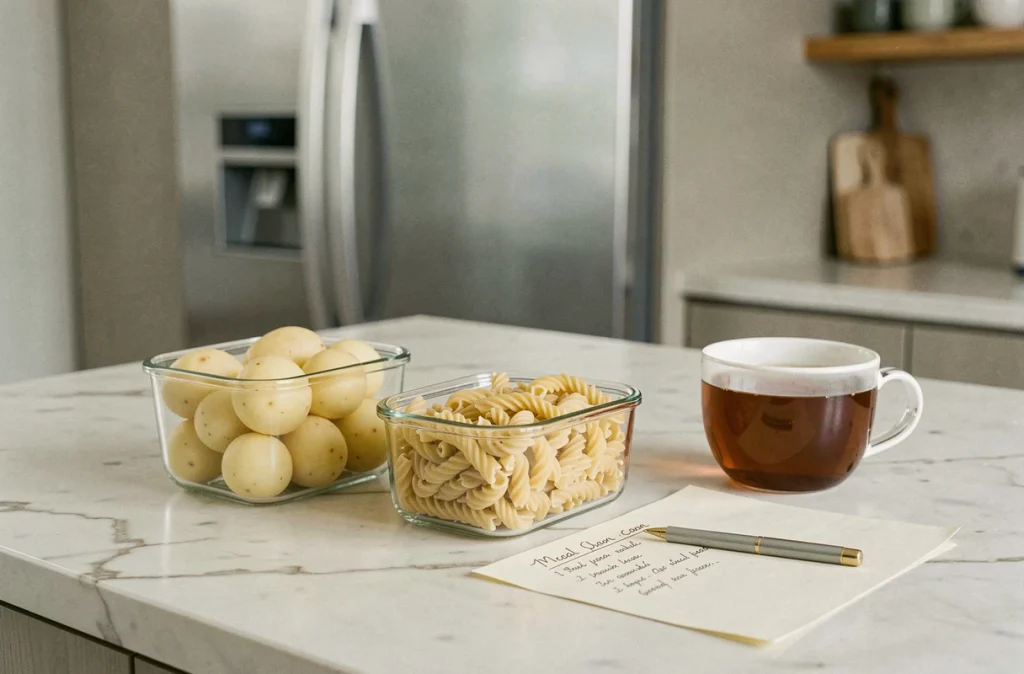
White rice and well-cooked pasta are the reference starchy foods for the diet before a colonoscopy. Their fiber content is negligible once cooked for a few minutes longer than usual.
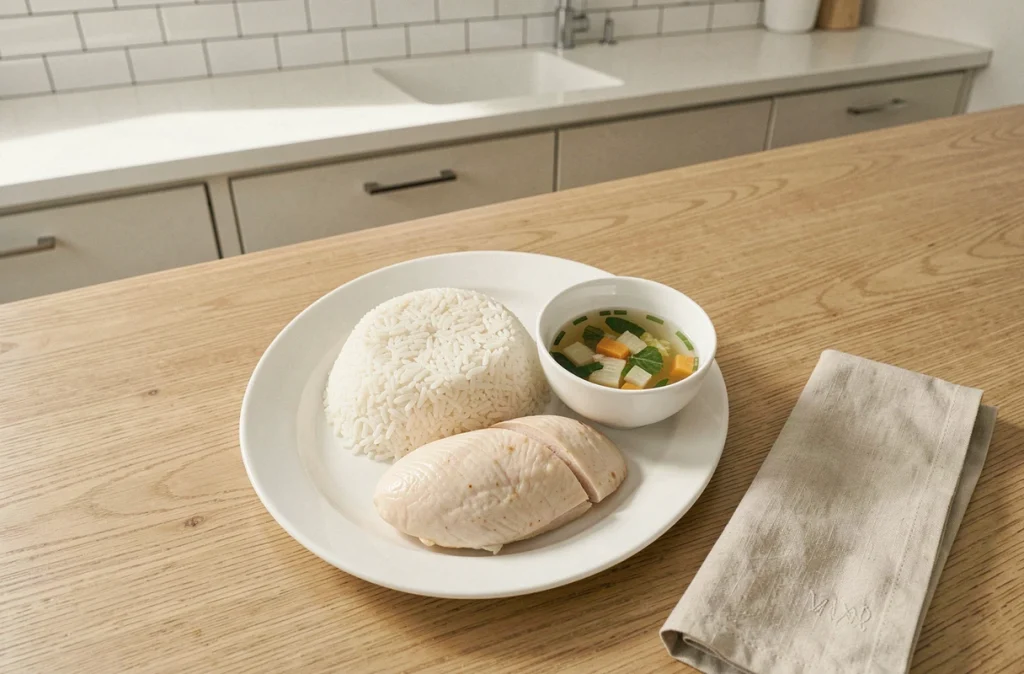
First option: poached chicken breast, white rice in broth, a small knob of butter. This basic meal can be prepared in less than twenty minutes and provides protein, slow carbohydrates, and a bit of fat for satiety.
Second option: white fish fillet (cod, sole, flounder) baked with a drizzle of olive oil, served with white pasta. Add a spoonful of filtered vegetable broth for flavor.
Third option: an omelet made with two or three eggs, well-cooked fine semolina, a plain yogurt for dessert. The egg remains the most versatile food in this diet as it can be prepared as an omelet, hard-boiled, soft-boiled, or poached without any residue.
Permitted snacks
Between meals, a few options can satisfy a craving without compromising preparation: a portion of jelly (without fruit pieces), filtered chicken broth, smooth apple sauce without skin, or a glass of clarified white grape juice.
Foods to avoid before a colonoscopy: common mistakes
The list of permitted foods seems clear on paper. In practice, some products regularly trap patients because they seem harmless.
- Whole grains, seed bread, muesli, and oatmeal contain insoluble fibers that leave significant residues in the colon
- Raw fruits (including bananas, often mistakenly considered “low-residue”) provide fibers and microscopic seeds that hinder visibility
- Vegetables in all forms, even cooked and pureed, remain excluded from the strict diet
- Fatty meats, cold cuts, and fried foods irritate the digestive tract and slow the effectiveness of the colon preparation solution
- Whole milk, aged cheeses, and flavored dessert creams are excluded even in an expanded diet
Whole grain bread is the most common mistake: many patients choose it reflexively for “health” reasons, while it is exactly the opposite of what the preparation requires.
The switch to clear liquids: managing the last hours before the exam
The transition to an exclusively liquid diet generally occurs within the twenty-four hours preceding the colonoscopy, alongside the intake of the colon preparation solution (PEG, sodium sulfate, or other as prescribed).
At this stage, the timing of the last solid meal is as important as its composition. The day before the exam, have your last low-residue meal at lunch rather than dinner. This allows more time for the digestive system to empty before the start of the liquid preparation and reduces gastric discomfort related to the purgative solution taken in the evening.
Permitted clear liquids during this phase include filtered chicken or beef broth (without visible vegetables or fat), tea or herbal tea without milk, clarified apple juice, still or sparkling water, and clear sweet beverages. Red or purple liquids should be avoided as they can stain the colon wall and distort the doctor’s observation.
A well-salted hot broth at the end of the day provides sodium, potassium, and a comforting warmth that partially compensates for the absence of solid meals. Salt and sugar in clear liquids help maintain energy until the exam.
Food preparation before a colonoscopy remains restrictive, but it rarely lasts more than three days. By structuring meals around lean proteins, white starchy foods, and plain dairy when the protocol allows, hunger remains manageable. The last point not to overlook: follow the specific instructions of your gastroenterologist, as protocols vary from one department to another.