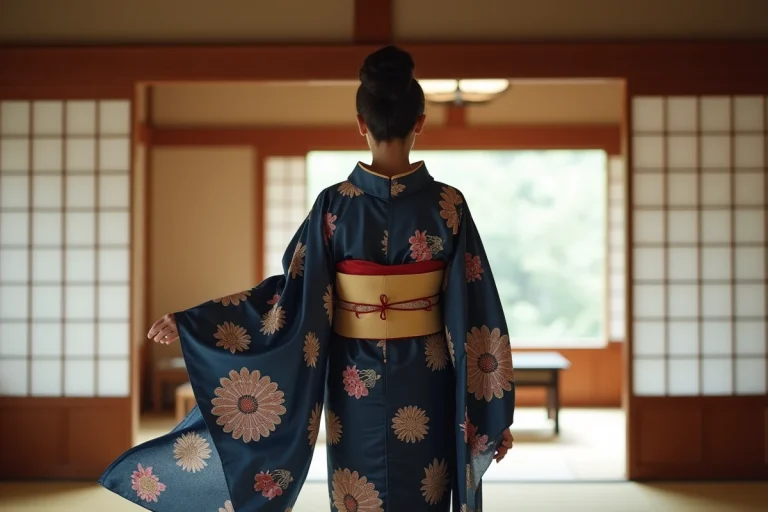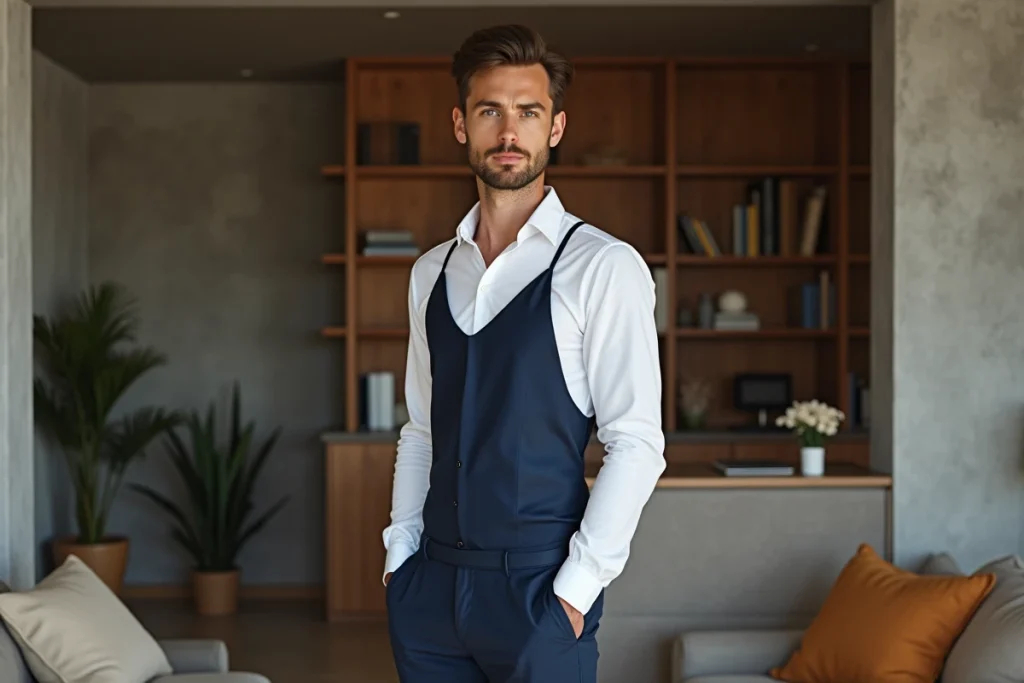
The men’s nightgown is not just about transposing a feminine cut onto a masculine body. The garment raises specific questions of pattern making, fabric choice, and integration into an existing wardrobe. Here, we detail the technical points that allow one to wear this piece without falling into disguise or cliché.
Pattern Making and Technical Construction of a Men’s Nightgown
A nightgown designed for a masculine physique requires a wider armhole and a structured shoulder line. Models simply resized from feminine patterns present a recurring problem: the shoulders pull on the side seams, and the drape of the fabric distorts at the torso.
We recommend favoring cuts with raglan armholes or dropped shoulders, which absorb the difference in shoulder width without adding volume to the bust. The ideal length is mid-thigh, short enough to avoid resembling a classic nightshirt, yet long enough to maintain the fluidity of the garment.
The collar remains a determining detail. A deep V-neck is suitable for slender torsos, while a slightly flared round neck works better on broader silhouettes. Finishes matter: a clean bias at the neckline is preferable to a too-thin rolled hem, which gives a fragile appearance unsuitable for a fabric under tension.

Choice of Fabrics: Silk, Modal, and Appropriate Weight
The classic pitfall is choosing a silk that is too lightweight and clings to the body, highlighting every contour. Style guides for slim men confirm this: very fluid and fine fabrics accentuate the silhouette instead of enhancing it. For lean physiques, a fabric with more body (cotton satin, silk crepe, thick modal) provides a sharper drape.
Following the trends in men’s nightgowns, we see that the most successful pieces combine comfort and fabric structure. Modal blended with a low percentage of elastane offers a good compromise: softness to the touch, wrinkle resistance, and a silhouette that does not cling.
- Natural silk (crepe or heavy charmeuse) remains the most luxurious fabric but requires delicate care and a sufficiently dense weight to avoid transparency.
- Modal or lyocell provide a similar touch to silk with better wash stability, making it a pragmatic choice for regular use.
- Cotton satin (or mercerized cotton) is suitable for warm seasons: it breathes better than satin polyester and ages without losing its luster.
Low-quality satin polyester, prevalent on marketplaces, should be avoided. It retains heat, generates static electricity, and gives an artificial shiny appearance.
Men’s Nightgown and Sleepwear: Integrating the Piece into a Cohesive Look
Wearing a nightgown at home requires no justification. The style question arises when trying to integrate it into a visible outfit, whether for a casual evening, a festival, or in a context where assertive sleepwear becomes a fashion code in its own right.
Layering is key to stepping out of the bedroom register. A satin nightgown under an unstructured blazer creates a contrast of styles that works. Wide linen or thick cotton pants anchor the outfit in a recognizable masculine wardrobe, avoiding a costume effect.
The post-pandemic trend towards visible comfort has normalized hybrid pieces between indoor and outdoor. Casual men’s fashion guides emphasize this point: a well-cut fluid garment can leave the apartment if the rest of the outfit compensates with structure. A fitted short, a pair of loafers, or minimalist sneakers are enough to recontextualize the nightgown.
Common Styling Mistakes
Pairing a nightgown with matching pajama pants directly sends it back to the sleepwear section. The piece loses all stylistic interest if it is not contrasted with a more structured element.
The total satin look (nightgown + satin pants + sandals) poses the same problem. Satin works in small touches, not in complete monochrome. Limiting satin to one piece per outfit remains a reliable rule.
Colors and Prints: What Works in a Masculine Wardrobe
Dark shades (black, burgundy, navy blue) are the easiest to integrate. They reduce contrast with the rest of the wardrobe and soften the lingerie aspect of the piece. Solid black, in particular, blurs the line between nightgown and short tunic, facilitating adoption.
Floral prints work as long as they stay within large scales and muted palettes. A spring floral pattern on a pastel background reinforces the association with women’s lingerie, while a dark botanical pattern on a black background reads as a fashion piece.
- Solid dark: the most versatile choice, suitable for all body types and contexts.
- Fine tone-on-tone stripes: add movement without overwhelming, work well in cotton satin.
- Subtle geometric print: an alternative to florals, with a more graphic rendering that moves away from the boudoir register.
Bright colors (fuchsia, turquoise) require mastery of the rest of the outfit. They transform the nightgown into a statement piece, which assumes a chic look built around it.
Caring for a Nightgown Made of Noble Fabric
Machine washing destroys natural silk in just a few cycles. Hand washing in lukewarm water with a gentle soap (like Marseille soap) preserves the fibers and the fabric’s luster. Flat drying, away from any heat source, prevents deformation.
Modal and lyocell tolerate a delicate cold cycle in the machine, provided a laundry bag is used. Ironing should be done at low temperature, on the reverse side, to avoid altering the satin touch.
A well-maintained nightgown retains its drape and softness for several seasons. The initial cost of a piece made from noble fabric is justified by this longevity, provided it is not treated as a disposable basic.