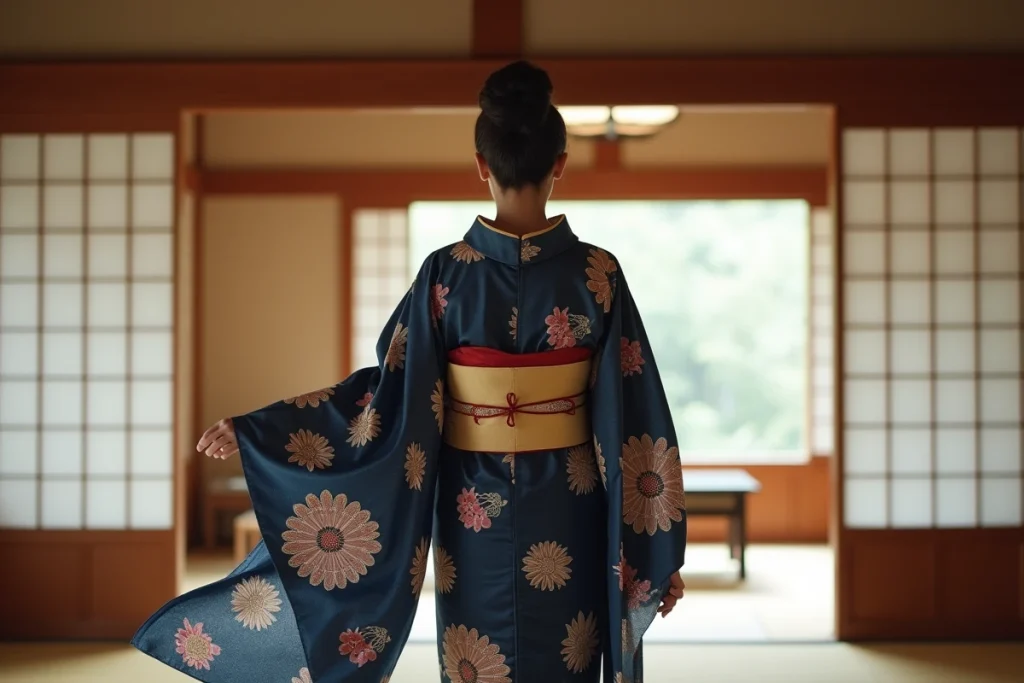
The kimono is distinguished from Western clothing by its construction of rectangular panels, without fitted seams at the shoulders or tapered armholes. The sleeves, a direct extension of the garment’s body, form an open pocket whose depth and length vary depending on the type of kimono worn. This structural peculiarity is not accidental: it encodes precise social information, readable by anyone who masters Japanese dress codes.
The length of the kimono sleeves follows a logic where the fabric communicates what words do not. Understanding this logic requires tracing back to historical foundations and then examining the textile and gestural mechanics that ensue.
Furisode and marital status: what the sleeve reveals at first glance
The term furisode literally means “swinging sleeves.” This type of kimono features the longest sleeves in the entire traditional Japanese wardrobe, sometimes descending almost to the ankles. The furisode is reserved for young unmarried women, worn during the coming-of-age ceremony or at formal events.
This attribution is not decorative. In the Japanese dress system, sleeve length functions as a marker of civil status. A married woman wears a kimono with shorter sleeves, the tomesode. The transition from furisode to tomesode publicly signals the change in status, without a word being spoken.
To discover kimono sleeves on Mademoiselle Camille, one must grasp that this codification dates back to the Heian period, during which the imperial court formalized a true textile language. Age, rank, and season dictated the cut, colors, and patterns. Some families refused any shortening of sleeves, even when it complicated daily movements.
Textile construction of the kimono: why the sleeve forms a pocket
A traditional kimono is cut from a single roll of fabric, often silk, shaped into rectangular panels sewn together with straight seams. The sleeve results from a folded panel sewn on three sides, with the fourth side remaining partially open under the arm. This opening, called miyatsukuchi on women’s kimonos, creates the characteristic pocket.
The depth of this pocket depends on the type of kimono:
- The furisode features a very deep pocket, sometimes exceeding a meter of suspended fabric, worn exclusively by unmarried women during ceremonies
- The tomesode, the formal kimono for married women, shortens the sleeve and significantly reduces the pocket
- Men’s kimonos almost entirely eliminate this pocket, with the sleeve sewn to the body of the garment along its entire length
This difference in construction between women’s and men’s kimonos is not anecdotal. The open pocket of women’s sleeves historically served as storage for small items, but also as an expressive surface, with the fabric capturing movement and amplifying each gesture.
Gesture and silhouette: the sleeve as an extension of the body
The wide sleeves of the kimono do not hang passively along the body. They accompany every arm movement and participate in a codified gesture. Greeting, serving tea, opening a fan: each action produces a swing of the fabric that is an integral part of the outfit.
This link between sleeve and movement explains why contemporary variations inspired by the kimono retain wide sleeves as a signature element. Even outside the ceremonial context of Japan, the wide sleeve remains the identifying trait of the garment.
The silhouette of the kimono functions as a cohesive system. The garment descends to the feet, the obi (wide belt) structures the bust, and the sleeves visually balance the verticality of the outfit. Shortening the sleeves without altering the rest would destabilize the proportions. Therefore, the length of the sleeve is not an isolated aesthetic choice: it responds to a textile architectural logic.
Colors, patterns, and seasons: the sleeve as a narrative surface
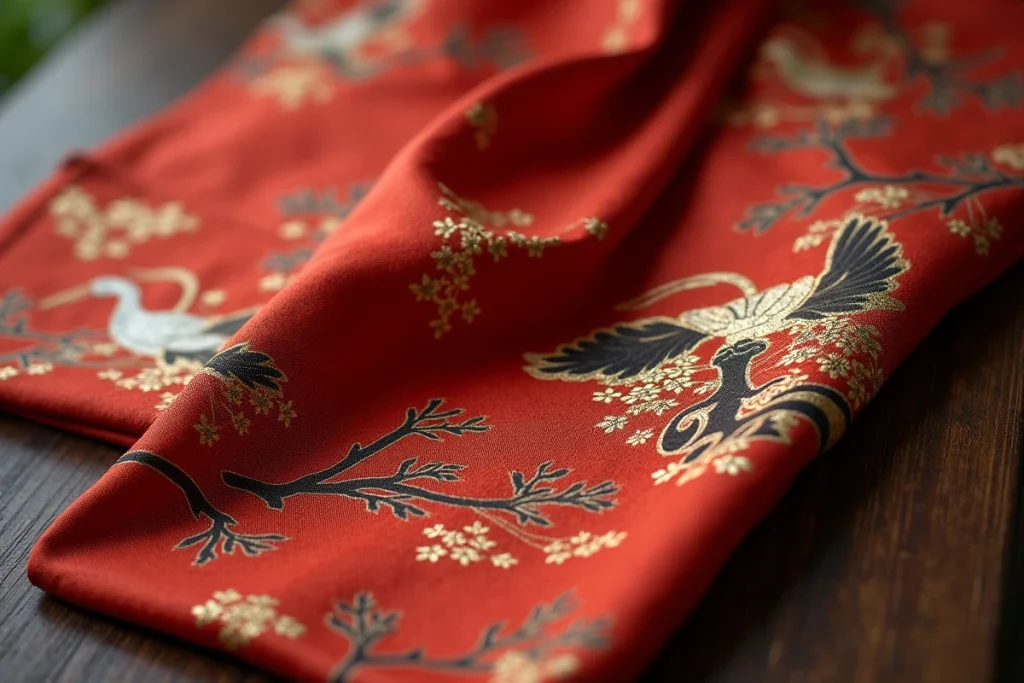
On a ceremonial furisode or tomesode, the sleeves carry a significant part of the painted or woven motifs. Cherry blossoms, cranes, waves, pines: these elements tell the season, the wish expressed, or the family’s rank. The longer the sleeve, the greater the available surface for this visual narration.
Dyeing and embroidery artisans treat the sleeves as distinct panels. On a quality furisode, the motif unfolds continuously from the body to the sleeve, creating a cascading effect when the arms are raised. This visual continuity requires specific technical expertise: the alignment of motifs between body and sleeve demands millimeter precision.
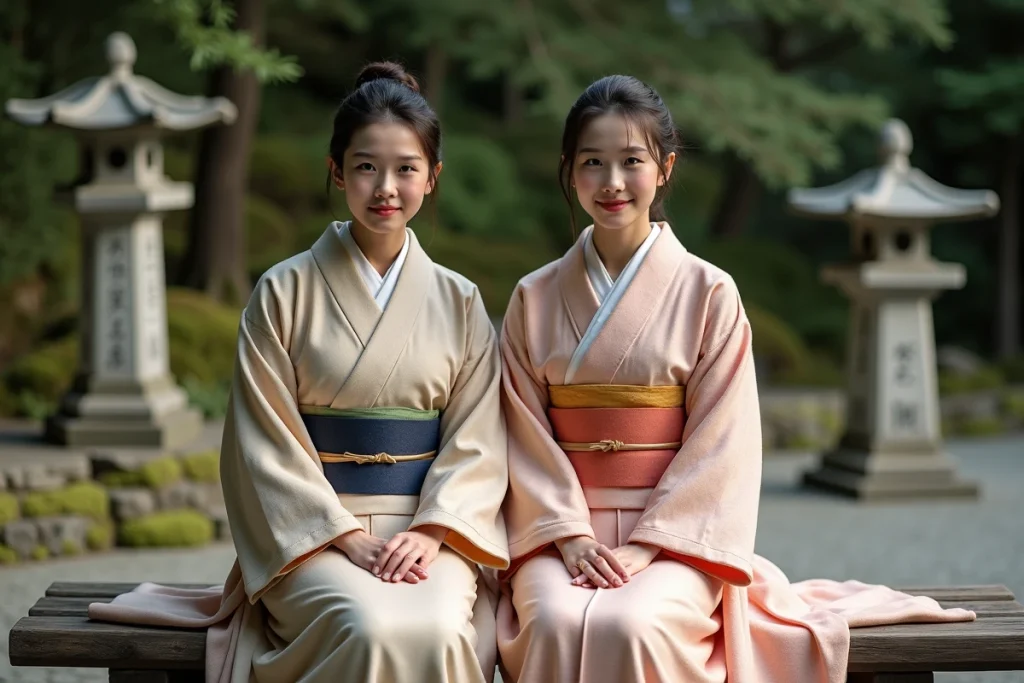
The symbolism of colors varies according to occasions. Bright hues (red, orange, gold) signal youth and festive ceremonies. Dark or subdued tones are suitable for married women and more formal events. The choice of motif and color on a kimono sleeve constitutes an act of social communication as much as an artistic gesture.
- Seasonal floral motifs (cherry blossom in spring, chrysanthemum in autumn) adhere to a strict calendar that experienced wearers know by heart
- Geometric or abstract motifs can be worn without seasonal constraints, making them more versatile
- Gold or silver threads woven into the silk indicate a kimono of very high formality, reserved for grand ceremonies
The long sleeve of the kimono thus combines three functions that Western clothing separates: it identifies the person’s status, structures the silhouette through its proportions, and offers a surface for visual narration. Removing one of these functions by shortening the sleeve would amount to erasing part of the message conveyed by the garment. The artisans who perpetuate traditional manufacturing maintain these dimensions, even when contemporary fashion pushes towards simplified cuts.