Each season brings its share of silhouettes spotted on the runways, shared on social media, and then adopted (or not) in real life. Distinguishing between what is actually worn daily and what remains confined to the catwalks requires some perspective. Here are the fashion trends of this season that deserve a place in your wardrobe, and those that are better admired from afar.
Wearable fashion trends or runway trends: how to tell the difference
Have you ever spotted a stunning piece in a photo, only to realize it would be impossible to wear to work or while running errands? That’s the crux of the issue. A wearable trend meets three simple criteria: it adapts to multiple occasions, it doesn’t require very specific accessories, and it remains comfortable throughout an entire day.
Sequin dresses, for example, regularly appear in editorial selections. They work for evening events, but their use remains limited. In contrast, the long flowy dress, found at several houses this season, effortlessly transitions from the office to a dinner on the terrace. A wearable piece is recognized by its actual versatility, not by its photographic potential.
This filter helps avoid impulsive purchases. It also allows you to explore fashion on Bridge News with a more critical eye on what is truly worth the investment.
Structured women’s tailoring: the most useful trend of the season
Women’s tailoring returns this season in a more assertive form. We’re talking about fitted blazers, pencil skirts, and classic-collared blouses. These pieces are not new, but their treatment has changed.
The fitted suit replaces the oversized silhouette as the reference shape. The cut is sharp, the shoulders defined without exaggeration, and the waist emphasized. This return to structure contrasts with the voluminous styles that dominated previous seasons.
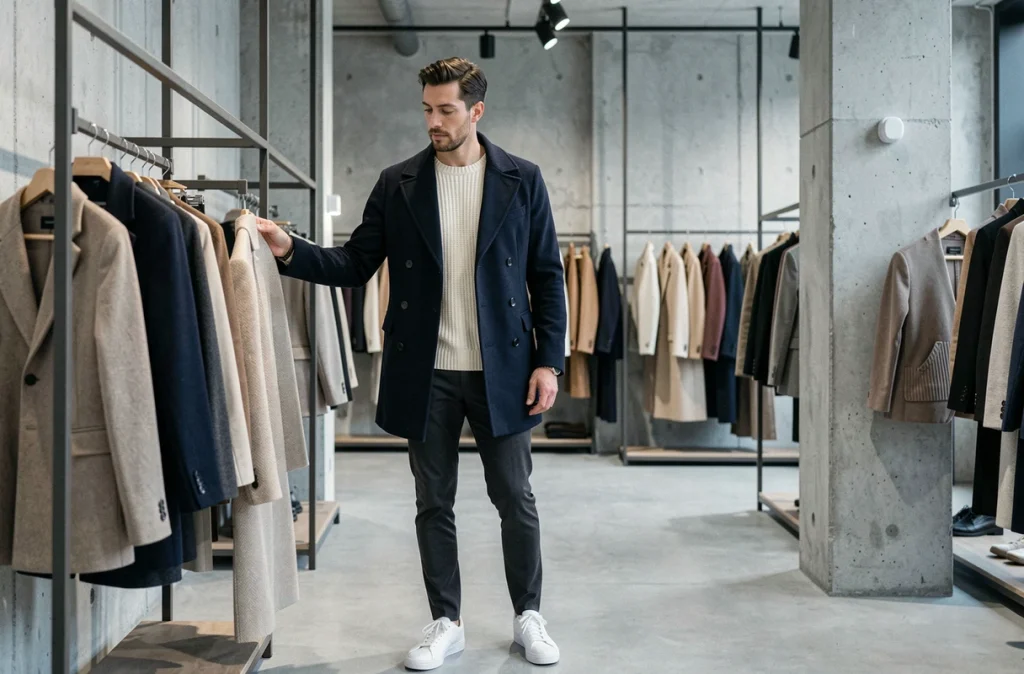
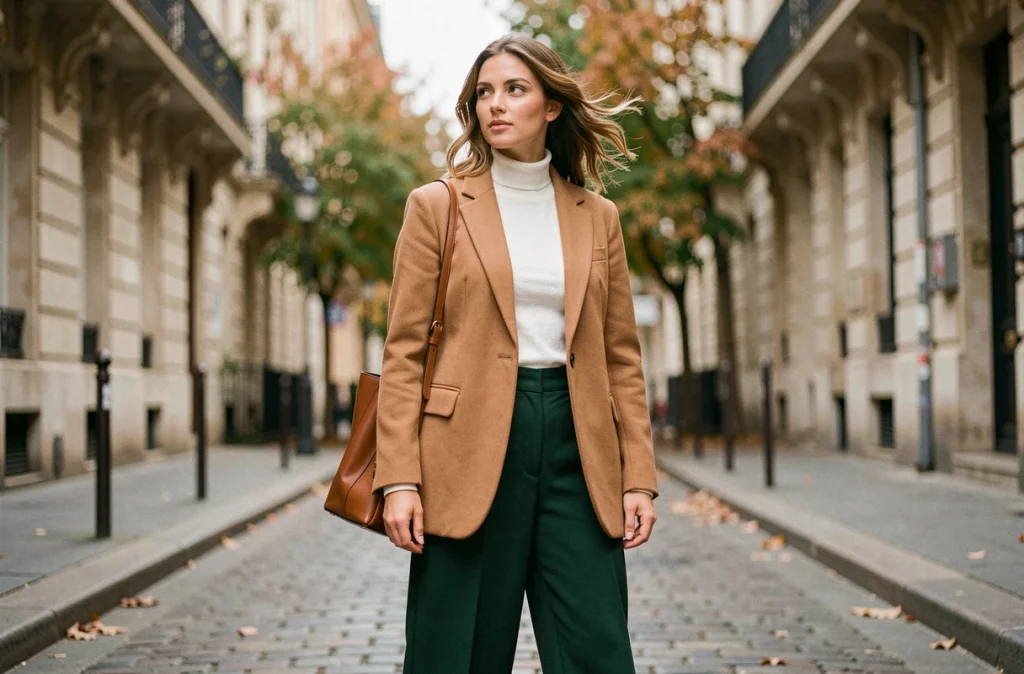
Why does this trend deserve your attention? Because a well-cut blazer can be worn with jeans, tailored trousers, or a midi skirt. It structures an entire outfit without requiring any particular styling effort. It’s the opposite of a statement piece.
- The fitted blazer works equally well in linen for summer and in lightweight wool for autumn, making it a sustainable purchase across multiple seasons.
- The pencil skirt, worn below the knee, pairs with white sneakers to break the formal aspect, or with ballet flats for a more classic look.
- The classic-collared blouse, tucked into wide trousers, creates a balance of proportions without any additional accessories.
Structured tailoring is probably the most directly translatable trend from the runway to the street this season.
Mastered layering: layering without weighing down your look
Layering has been around for a long time. What changes this season is the precision with which it is practiced. We’re no longer talking about piling a sweater over a shirt out of thermal necessity, but about a true play of proportions between short and long pieces.
The most spotted combination: a long coat worn over a short blazer, with fitted trousers underneath. Another successful combination: a satin dress over straight trousers, worn open like a tunic.
This style requires a bit of practice. The classic trap is to layer pieces of the same length, which flattens the silhouette. The most reliable rule: alternate a fitted piece and a loose piece with each layer.
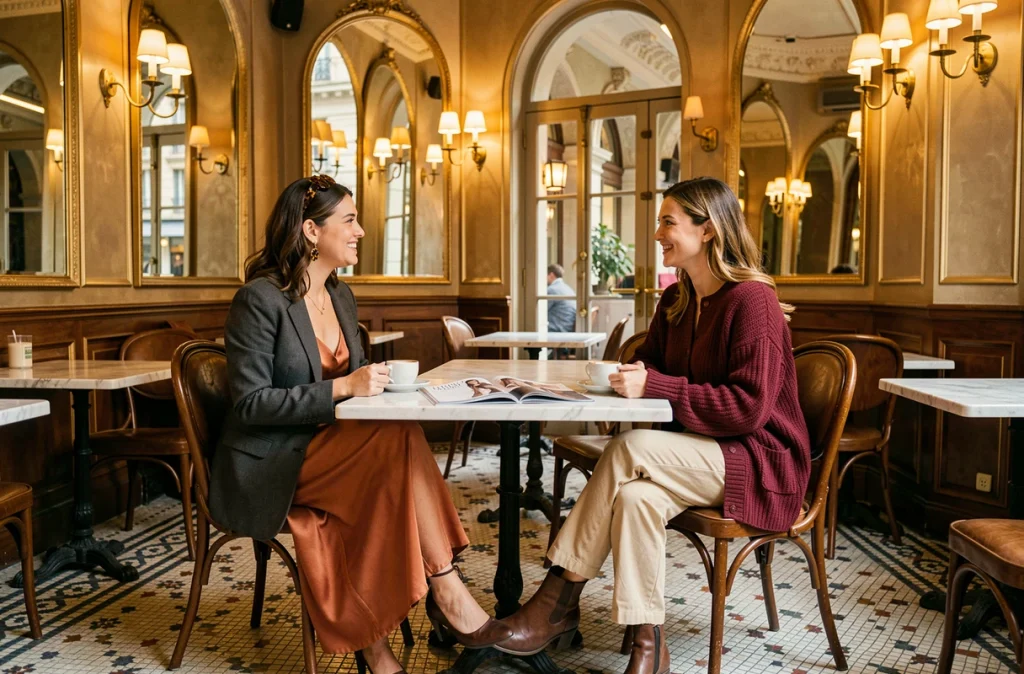
Layering works particularly well in mid-season, when temperatures vary throughout the day. It allows you to remove or add a layer without sacrificing the overall look. It’s a practical approach before being aesthetic.
Trendy colors and materials: what really changes this season
On the color front, this season marks a return of deep and warm tones. Bordeaux dominates a large part of the collections, followed by chocolate brown and anthracite gray. These shades combine easily with each other, making them accessible even without a strong sense of style.
Pastel pink and Klein blue provide contrast for those wanting a brighter touch. Mustard yellow, more subdued than the bright yellow of past seasons, works well as an accessory (bag, scarf, belt) without disrupting a neutral outfit.
- Bordeaux can be worn as a total look or as an accent on a gray or black outfit.
- Klein blue, bolder, works better as a single piece (a sweater, a skirt) than as a complete outfit.
- Camel remains a classic transitional color, easy to integrate into an existing wardrobe.
For materials, the “elevated boho” style is gaining ground. This means suede, fringes, and embroidery, but treated in sharper cuts than the festival bohemian style of the 2010s. The result is more refined, less costume-like.
Fashion accessories: details that change an entire outfit
Large silhouettes are not the only ones evolving. This season, accessories are as important as the garments themselves. Cut-out ballet flats are gradually replacing classic models. Mini-decorated bags, worn crossbody, add dimension to a simple outfit.
Three-dimensional details (flowers, feathers, textured elements) appear on brooches, earrings, and belts. These are pieces that transform a basic look without requiring a complete wardrobe change.
Elastic strap shoes, halfway between sandals and ballet flats, offer a compromise between comfort and style that high heels do not allow. A well-chosen accessory can be enough to anchor an outfit in the season without investing in new major pieces.
The fashion trends of this season share a common point: they prioritize structure and details over volume effects or extreme colors. A well-cut garment and an expressive accessory replace the showpiece. This is a direction that makes fashion easier to adopt in everyday life, and it’s undoubtedly what makes it sustainable.