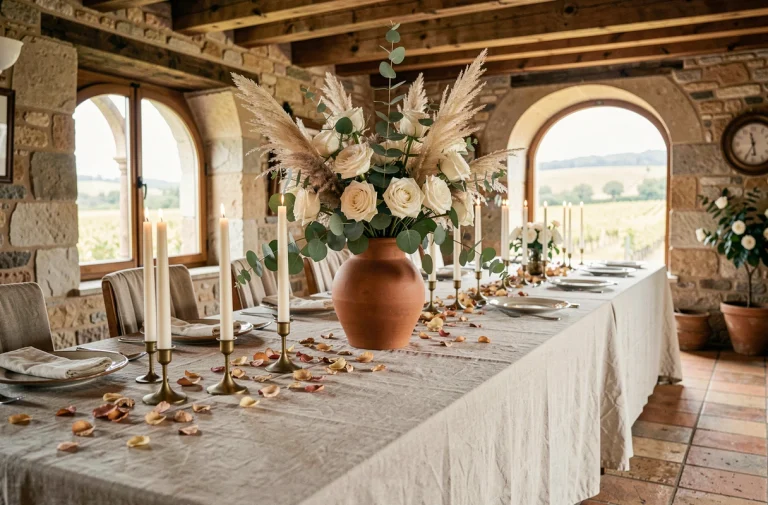
Organizing wedding entertainment that holds up requires thinking beyond pure entertainment. Each format must fit seamlessly into the flow of the day without creating downtime, remain accessible to all types of guests, and respect the constraints of the venue. Here are ten concrete formats, tested in real conditions, that meet these requirements.
1. Collaborative real-time mural
A large canvas set up from the start of the cocktail hour allows guests to contribute freely throughout the day. The format works because it requires no artistic skill, can be done standing or sitting, and does not impose a specific time slot.
We recommend providing acrylic markers instead of paint: the drying time is almost instantaneous, which avoids stains on outfits. The canvas then becomes a wall memory for the couple, much more personal than a traditional guestbook.
2. Photo gallery shared via QR code
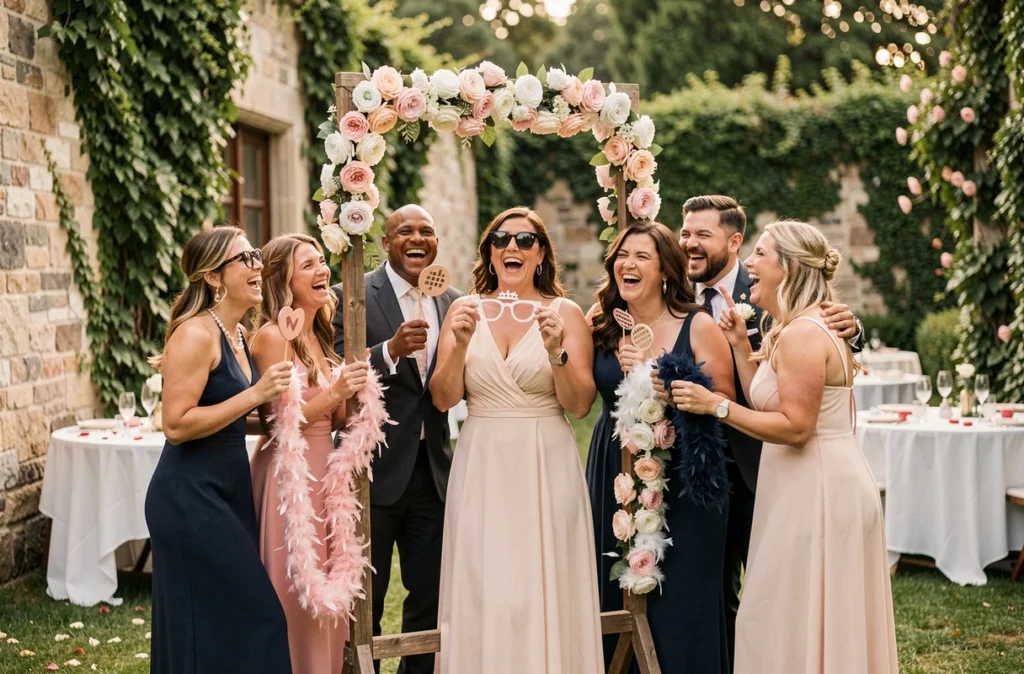
Digital galleries are gradually replacing traditional photo booths. A QR code displayed on each table allows guests to upload their photos without downloading an app or creating an account, as Revel highlights in their publication from September 14, 2026. Each guest becomes a contributor to the visual narrative of the day.
The technical interest lies in the complete absence of friction: no waiting in line for a booth, no paper prints to manage, and a much broader photographic coverage since each guest captures different moments. You can find other entertainment options on Cœur de Mariage that complement this participatory approach.
3. Themed escape game centered around the couple
The wedding escape game works as long as it is custom-scripted. A generic turnkey scenario does not produce the same effect as a plot built around the couple’s story, with clues hidden throughout the venue.
This format fits into the trend of cooperative and scripted experiences documented by MB Mariage in September 2026. It mixes groups of guests who do not know each other and creates a collective dynamic that is hard to achieve with a simple quiz. Plan for teams of five to seven people and limit the duration to about twenty minutes to avoid encroaching on the meal.
4. Personalized perfume workshop
Each guest creates a fragrance from a selection of essences prepared by a professional perfumer. The workshop takes place in small rotating groups, making it compatible with a cocktail or extended cocktail hour.
The bottle goes home with the guest as a sensory souvenir, a much more lasting item than a sugared almond. The cost per person remains comparable to that of a traditional guest gift, but the experience lived on-site adds a memorable dimension that objects alone do not provide.
5. DIY cocktail bar
The themed bar goes beyond simply providing drinks when guests participate in the mixing. A professional bartender oversees the preparation, offers recipes tailored to the wedding theme, and systematically prepares visible and attractive non-alcoholic alternatives.
This point is not trivial. Fêtes.com, in its update from September 5, 2026, reminds us of the necessity to avoid alcohol-based entertainment. Offering mocktails crafted with the same care as alcoholic cocktails ensures that every guest can participate without discomfort.
6. Close-up magic between tables
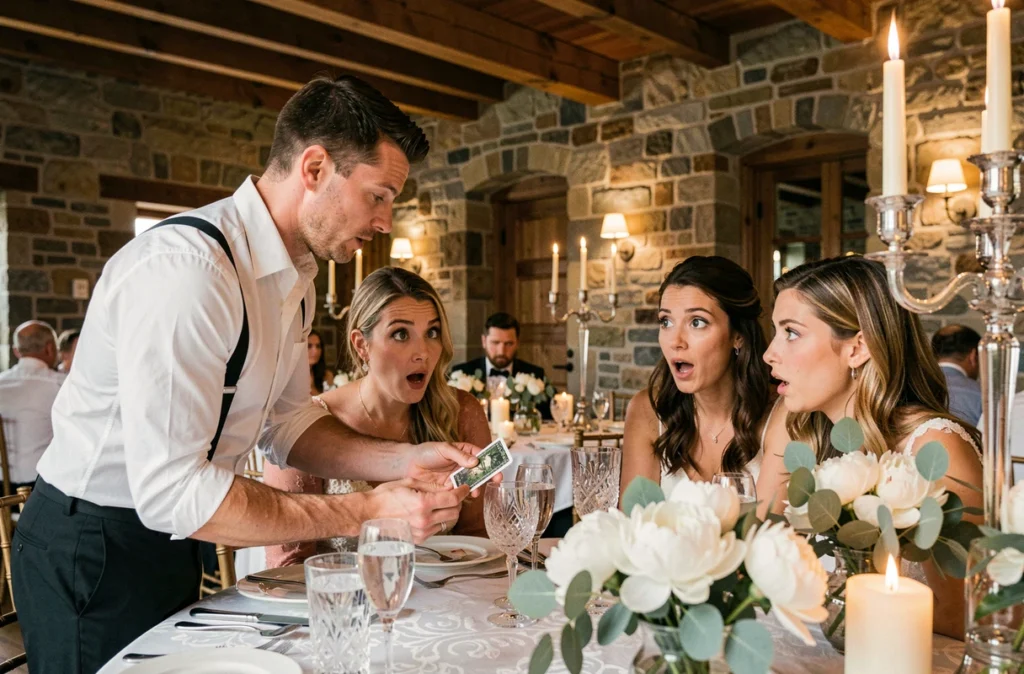
A close-up magician circulates among the tables during the meal. This format addresses a concrete problem: the downtime between courses, often when the energy dips.
Close-up magic has an advantage over stage performances: it requires no technical setup or interruption of the flow. The tricks are performed less than a meter from the guests, creating a much stronger surprise effect than a distant act. Plan for two to three passes per table throughout the meal.
7. Flash dance class before the first dance
Rather than letting guests passively watch the first dance, a ten-minute flash class teaches a few simple steps to the entire assembly. The instructor adapts the choreography to the song chosen by the couple.
The goal is to fill the dance floor as soon as the first dance begins instead of waiting for the atmosphere to build gradually. This format works particularly well when the musical style is unfamiliar to the guests (swing, salsa, Viennese waltz).
8. Collective time capsule
Each guest writes a message, a wish, or a prediction on a card slipped into a sealed box. The couple opens the capsule one, five, or ten years after the ceremony.
The time capsule differs from the guestbook by its deferred narrative dimension. Guests write differently when they know the message will only be read years later. We observe that the messages become more personal, more engaged, and sometimes funnier.
9. Drone entertainment with aerial capture
A drone operated by a professional captures aerial images of the ceremony, the venue, and the group photo. The result produces sequences inaccessible to a ground videographer.
French regulations impose several constraints that must be respected:
- The capture of images of identifiable people falls under GDPR, which requires prior information for guests
These constraints make it necessary to engage a certified provider with all the necessary authorizations.
10. Giant outdoor wooden games
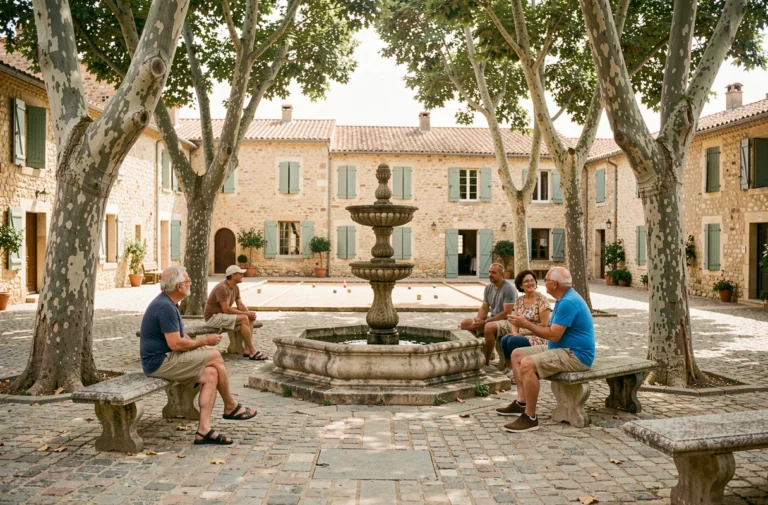
Molkky, giant mikado, kubb, Breton puck: these wooden games create a space for spontaneous conviviality during the cocktail hour or between two highlights. Their main advantage is intergenerational accessibility.
The rules can be explained in less than a minute, no physical performance is required, and passive participation (watching, cheering) remains natural. Fêtes.com emphasizes this criterion: always plan for a passive participation option for elderly, shy, or mobility-impaired individuals. Giant games meet this condition without additional design effort.
The choice of wedding entertainment should be guided by three concrete criteria: compatibility with the venue, real accessibility for all types of guests, and seamless integration into the day’s schedule. A format well-calibrated on these three axes will leave a more lasting impression than a collection of poorly articulated activities.