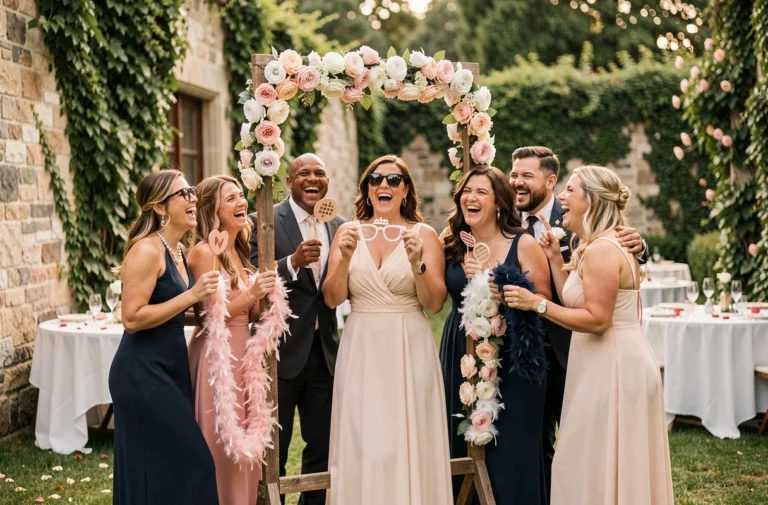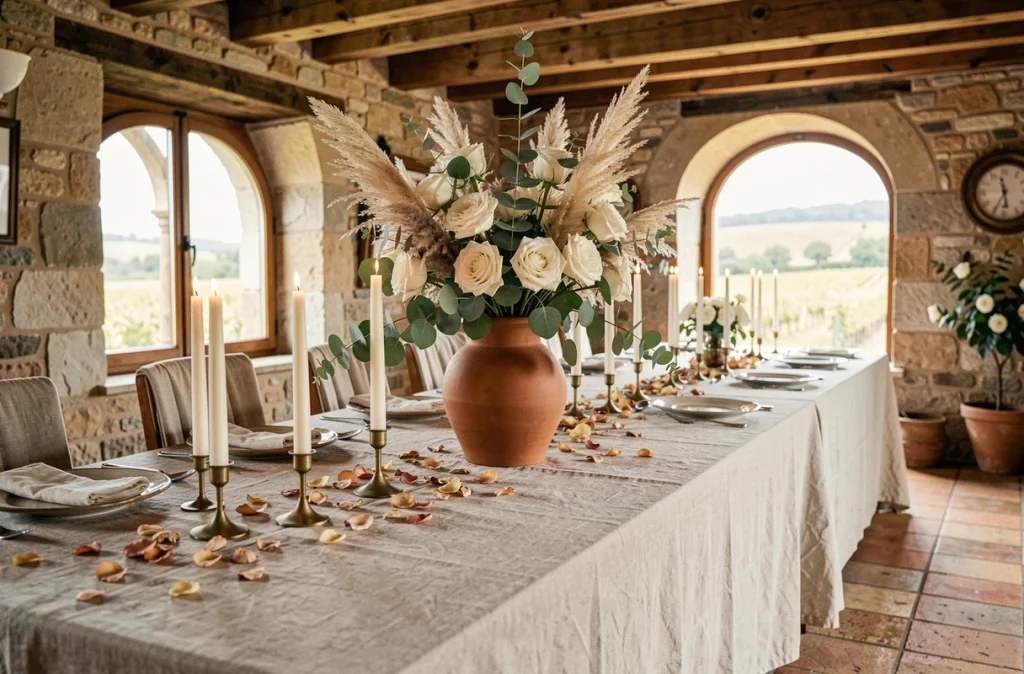
Wedding decoration refers to the overall visual, material, and sensory choices that shape the atmosphere of a ceremony and its reception. In 2024, these choices are oriented towards a journey experienced by the guests, far beyond just table arrangements. Couples are favoring reusable elements, bold color palettes, and a coherence between the ceremony and reception that transforms each space into an extension of the previous one.
Wedding Decoration as a Sensory Journey
The traditional approach consists of decorating a venue and then welcoming guests. The current trend reverses this logic: decoration is conceived as a journey that guests traverse. Light, circulation, scents, and sounds contribute as much as centerpieces to the overall atmosphere.
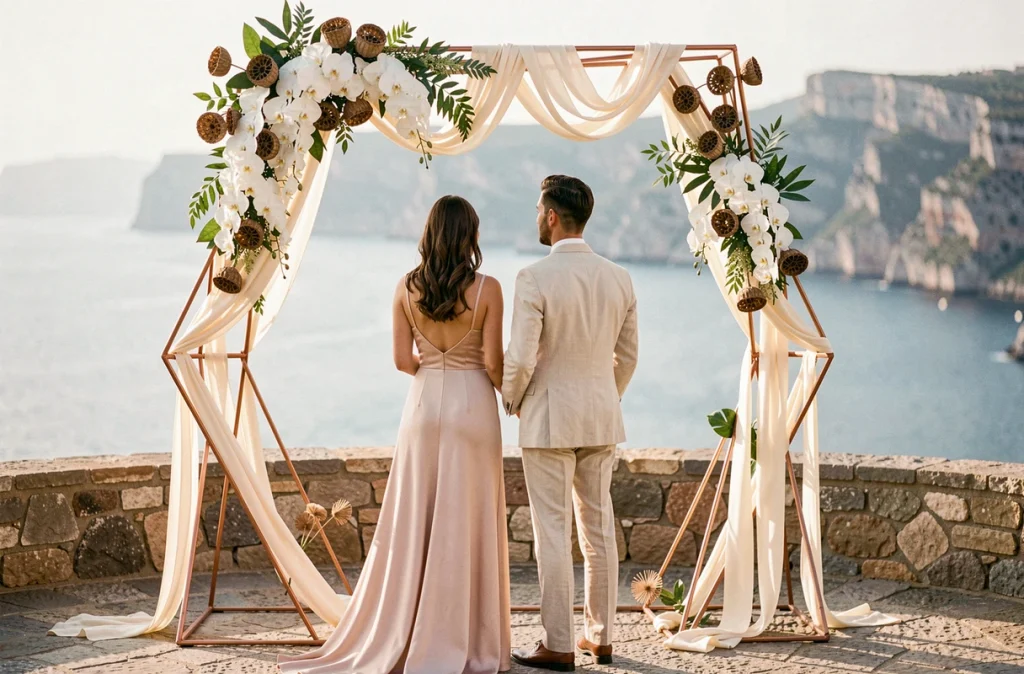
Specifically, this means that an element set up for the ceremony (a floral arch, a wooden structure, a set of lanterns) is moved or repurposed for dinner. This visual continuity creates a narrative thread between the moments of the day, rather than a succession of distinct backdrops.
A catalog like the one offered on ddaydeco.fr allows for visualizing modular structures designed for this use, where the same element serves both the ceremony and the reception without aesthetic disruption.
This principle of journey also encourages a rethink of lighting. Instead of uniform lighting, warm light zones guide guests from one space to another: low-hanging garlands over the cocktail area, grouped candles on the tables, discreet spotlights on the dance floor.
Bright Colors and Bold Palettes for the Wedding Table
Pastel tones and all-white settings are receding. The 2024 palettes embrace bold colors: lemon yellow, deep terracotta, sage green, Klein blue. These shades are no longer limited to flowers. They appear on stationery, napkins, chair ribbons, and even in the choice of guest favors.
A palette reduced to two or three strong colors provides more coherence than a multitude of soft shades. The contrast between a neutral tablecloth (ecru linen, raw cotton) and brightly colored elements creates visual impact without overwhelming the overall look.
Combining Colors and Natural Materials
The 2024 trend marries these bright colors with raw materials: untreated wood, artisanal ceramics, woven wicker. This combination avoids the artificial effect that saturated colors can produce on plastic or metallic surfaces.
Seasonal flowers play a key role in this balance. A short floral arrangement, placed directly on the table rather than elevated, allows guests to see and converse with each other while adding color without creating a green wall between diners.
Rental and Reuse: Eco-Responsible Wedding Decoration
The reflex of mass purchasing disposable decoration after a single use is clearly declining. Several alternative models now coexist:
- The rental of dishes, furniture, and decorative structures allows for access to higher quality elements than a single purchase budget would permit, while avoiding post-wedding storage.
- Potted plants are gradually replacing cut floral arrangements. They decorate the ceremony, move to the tables, and then either go home with guests as gifts or return to a nursery.
- The concept of a “wedding closet” is developing: couples lend or share supplies already used in previous weddings, thus avoiding the production of single-use waste.
This eco-responsible logic is not limited to ecological gestures. It changes the very nature of the chosen objects. A rented stoneware vase imposes a different aesthetic than a bulk-bought glass vase: heavier, more textured, more unique. Reuse influences style as much as budget.
Stationery and Seating Plan: Personalization Without Overproduction
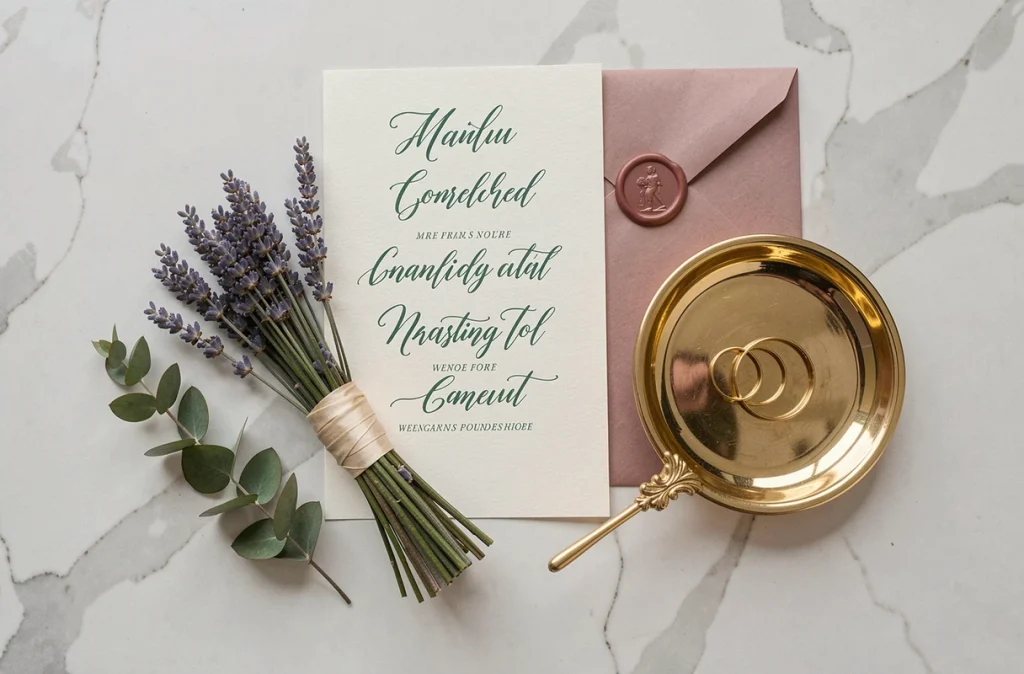
Wedding stationery (invitations, menus, seating plans, place cards) remains an area where personalization is strongly expressed. The 2024 trend values handmade or small-batch printed materials on recycled paper, using plant-based inks.
The seating plan is also evolving. Rather than a large printed panel, some couples opt for reusable supports: engraved mirrors, chalkboards, painted wooden panels. These supports become decorative elements themselves and are kept after the reception.
Guest Favors that Extend the Decoration
Guest favors are now integrated into the table’s scenography. A small jar of local honey, a scented candle poured into a ceramic container, a mini succulent in a pot matching the table colors: the guest favor is an integral part of the decor rather than being distributed separately at the end of the evening.
This dual use (decoration during the meal, keepsake afterwards) reduces the total number of objects to produce and transport, while enhancing the visual coherence of each table.
The most memorable weddings in 2024 are not necessarily the most richly decorated. They are those where each element serves a dual function (decor and use, decor and memory, decor and flow), where the palette remains tight, and where guests traverse a space designed for them rather than a backdrop designed for photos.